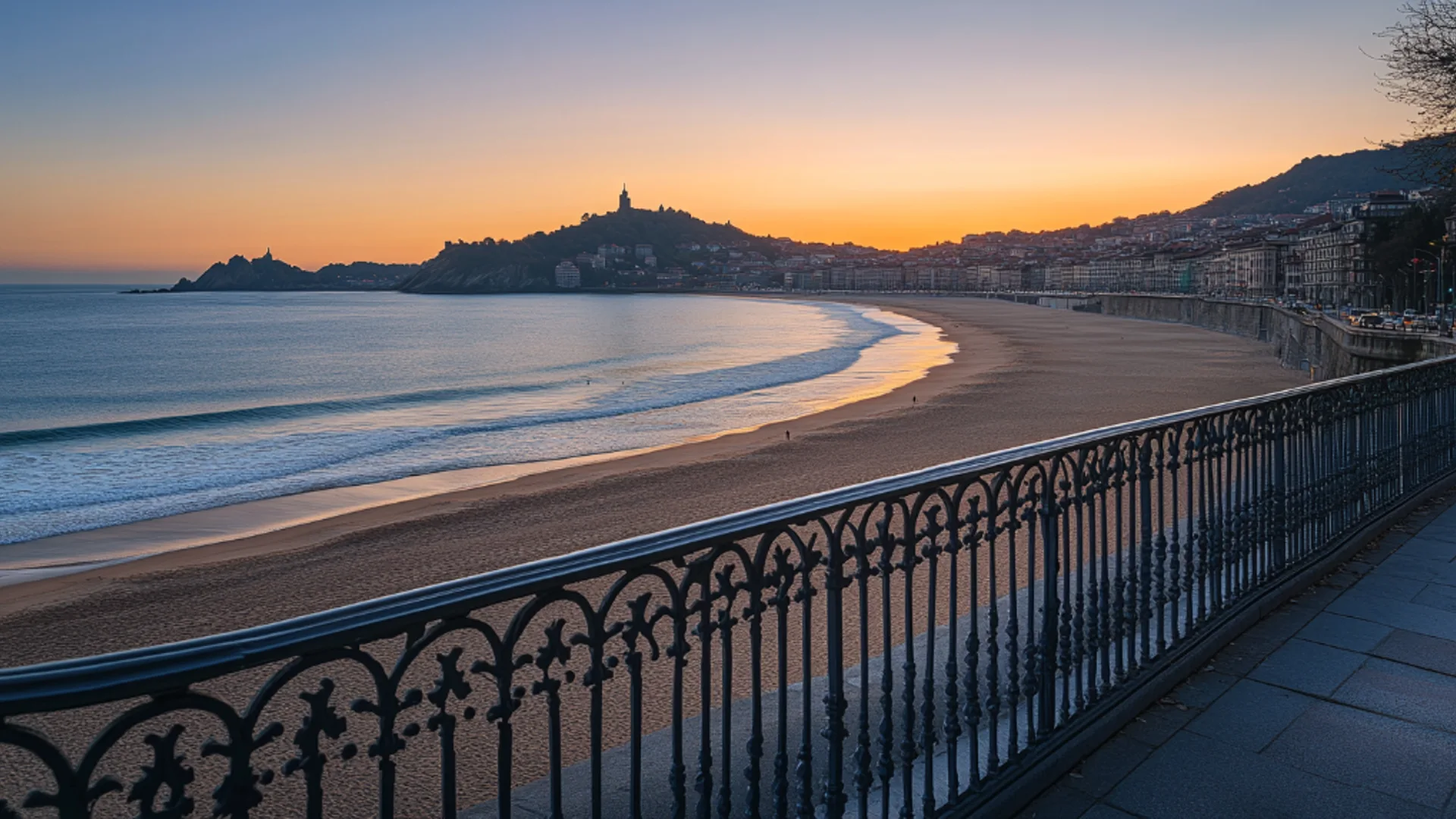
Built in service to a single bay, La Concha, this is Basque country at its most elegant. The old town (Parte Vieja) holds the world's highest concentration of bars, but the city's ambition extends to the three-star temples in the surrounding hills. It is Belle Époque grace and a profound obsession with food, side-by-side.
The city has more Michelin stars per square meter than anywhere else on earth, a product of its private 'txoko' gastronomic societies.
La Concha's white balustrade was installed in 1910 and has barely changed since — the same ironwork that framed the bay for visiting royalty still catches the salt spray today.
The local txakoli wine is poured from a great height not for show, but to aerate the slightly effervescent, acidic wine.
Every pick, at a glance
The grande dame of the Urumea River since 1912, where Hollywood royalty stays for the film festival. A century of stories echoes in the gilded lobby.
CentroSleep on a cliff above the Cantabrian Sea, attached to Pedro Subijana's three-star temple of gastronomy. The views are as breathtaking as the food.
Monte IgueldoEach room is a tribute to a film icon, designed with enough wit to feel more like a premiere than a theme hotel.
CentroThe view of La Concha from a sea-facing room isn't a feature; it is the entire point of staying here.
CentroFour decades and two generations of redefining Basque cuisine in the family house where the 'new Basque' movement was born.
Alto de MiracruzThe city's third-wave standard-bearer. Their meticulously sourced filter coffee is a welcome ritual after a txakoli-fueled night.
GrosTechnically flawless tasting menus served in a dining room that feels like a quiet, sun-drenched sanctuary in the Lasarte countryside.
Lasarte-OriaLess a meal, more a series of beautiful, provocative questions posed by chef Andoni Luis Aduriz in a farmhouse setting.
ErrenteriaPedro Subijana's clifftop stage, where three-star seafood competes with the dramatic Atlantic sunset for your attention.
Monte IgueldoGo for the city's most revered tomato salad and the txuleta steak they famously sell out of by 1:15 pm.
Parte ViejaIn autumn, the bar overflows with wild mushrooms, grilled simply with garlic and served to a rapturous, standing-room-only crowd.
Parte ViejaNo pintxos on the bar here; order the melting veal cheeks or seared foie from the chalkboard and watch the magic happen in the tiny kitchen.
Parte ViejaAn entire bar dedicated to the humble anchovy, served a dozen ways on a slice of bread. Start with the spider crab topping.
Parte ViejaHike up from the old town through the trees to the fortress for the defining postcard view of La Concha bay.
Parte ViejaTake the 1912 funicular for the panoramic photos, but stay for a ride on the wonderfully rickety, vintage Swiss roller coaster.
AntiguoRafael Moneo's twin glass cubes, which glow like lanterns on the edge of Zurriola beach at night.
GrosA 16th-century convent with a stunning, perforated-metal extension, telling the story of Basque culture from the inside out.
Parte ViejaThe loudest bars usually serve the best prawns.
The percussive slap of napkins on tile and the boisterous roar of the Parte Vieja in full swing.
Parte ViejaA high-decibel sanctuary of sports chatter and the rhythmic clatter of cider bottles on marble counters.
Parte Vieja- The ritual crawl is 'txikiteo'. One or two pintxos and a small drink per bar, then move on. Never settle in.
- Order hot pintxos from the blackboard, not just the cold ones on the bar. The kitchen-made dishes are where the artistry is.
- A 'zurito' is a small glass of beer, and a 'txikito' is a small glass of wine. Order them to pace yourself.
- Book Michelin-starred restaurants months in advance. Lunch seatings are often easier to secure and offer the same menu.
- Most shops close for siesta from roughly 1:30 PM to 4:30 PM. Plan your shopping around it.
- The 16 and 18 buses from the Boulevard in Centro are the easiest way to get to the Michelin restaurants in the hills.
Built for a fourteen-year-old: salt water in the morning, heights and views in the afternoon, sugar to close.
Tap a number below to fly to it · tap the location button for “you are here”
Book a beginner surf lesson at Zurriola — Gros is the young side of town and the beach breaks are made for first waves. Pukas Surf Eskola on the Zurriola promenade runs group classes all summer.
Pukas Surf Eskola — directionsRide the 1912 wooden funicular up Monte Igueldo. The creaking amusement park at the top — vintage rides, the Casa del Terror, the little mountain railway along the cliff edge — is pure old-fairground charm, and the view over La Concha is the best in the city.
Funicular de Monte Igueldo — directionsSwim La Concha in the flat calm of the bay, then walk the full crescent of the promenade railing from the Alderdi Eder gardens to Ondarreta at low tide.
Playa de la Concha — directionsFinish the Ondarreta walk at the Peine del Viento at high tide — Chillida's iron combs bolted into the rock, with blowholes in the paving that fire sea spray without warning.
Peine del Viento — directionsThe Aquarium at the harbour end of the Parte Vieja has a 360° shark tunnel; walk back along the harbour wall past the fishing boats and the ice-cream kiosks.
Aquarium Donostia — directions
The city's best artisan gelato, two blocks from the Zurriola seawall — the locals' post-surf reward, small-batch and worth the queue.
GrosThe classic cone at the mouth of the old town — the natural finish line of the evening paseo, queue and all.
Parte ViejaAçaí bowls, smoothies and cold-pressed juices on Fermín Calbetón — the old town’s one properly teen-calibrated address.
Parte ViejaWhere Things Are
Four neighborhoods to orient your first visit
Parte Vieja
The old town wedged between the port and the river mouth. The densest concentration of pintxos bars on Earth, narrow stone streets, and the pulse of everything that makes this city eat.
Gros
Surfer neighborhood east of the Urumea river. Younger energy, excellent pintxos bars with less tourist crush, Zurriola beach, and the Kursaal conference center anchoring the waterfront.
Centro
The elegant Belle Époque core between La Concha bay and the commercial district. Grand hotels, the cathedral, tree-lined boulevards, and the civic formality that earned this city its royal resort status.
Antiguo
Western end of La Concha bay approaching Monte Igueldo. Residential calm, Ondarreta beach, the Peine del Viento sculptures, and some of the city's most interesting restaurants away from the old town noise.