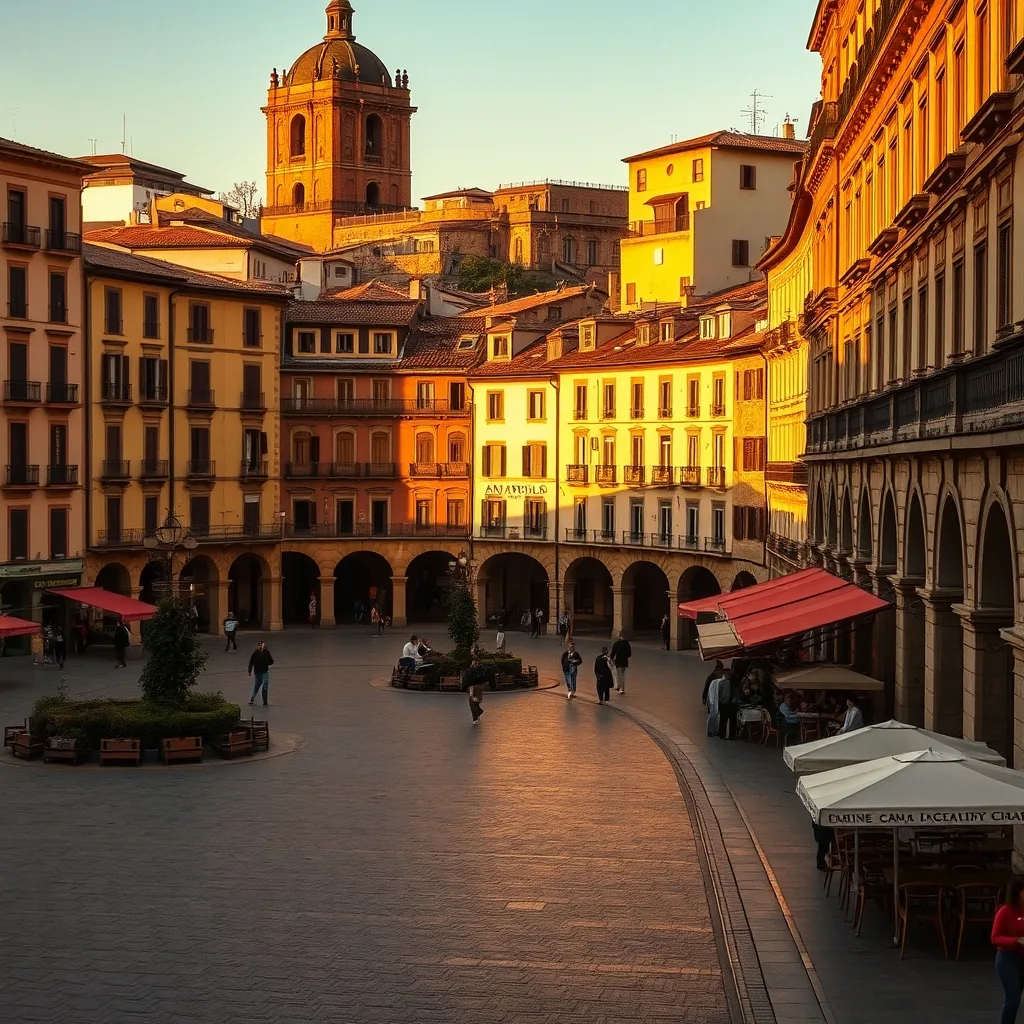
Most of the world knows Pamplona for nine days of running bulls, but the city is far more than its fiesta. Inside the medieval Casco Viejo, the pintxo streets of San Nicolás and Estafeta pack in some of the best bar food in Spain; the elegant Ensanche holds two Michelin-starred kitchens and the city's oldest ice-cream counter; and a green belt of Renaissance ramparts and romantic gardens rings it all. Start at Plaza del Castillo and let the old town pull you in.
The San Fermín encierro runs uphill through Calle Estafeta — a 300-metre straight that is the longest stretch of the route.
The txikiteo is the local ritual: one small drink and one pintxo per bar, then move on. Never settle in for long.
Café Iruña on Plaza del Castillo has been open since 1888 and keeps a life-size Hemingway statue at the bar where he drank.
Every pick, at a glance
Reworked Navarran classics on the encierro route — pintxos below, a proper dining room above. The old town's most exciting kitchen without the Michelin formality.
Casco ViejoOne Michelin star and the more classical of Pamplona's two. Chef Pilar Idoate cooks Navarran tradition with an avant-garde edge — mushrooms, truffle, farm eggs.
EnsancheA Bib Gourmand for genuine value — much of the refinement of the starred houses at a gentler price, built on seasonal Navarran produce.
EnsancheA temple of the pintxo since 1968, just off Plaza del Castillo. Its dressed spider-crab (txangurro) is one of the most famous single bites in the city.
Casco ViejoA repeat competition champion and Guía Repsol Solete on bar-lined San Nicolás — haute-cuisine pintxos eaten standing, for a fraction of tasting-menu prices.
Casco ViejoA Calle Estafeta cornerstone since 1959, hams hanging thick from the ceiling, right on the bull-run route. Reliable, unhurried, deeply traditional.
Casco ViejoThe city's only five-star, open since 1881, with literary suites and balconies directly over the encierro route on Plaza del Castillo. Hemingway slept in room 201.
Casco ViejoSet within the Taconera gardens on the green edge of the old town — park views and quiet, while everything stays within a short walk.
Taconera/CiudadelaThe city's living room — 14,000 square metres of arcades and café terraces, ringed by the historic cafés where Pamplona gathers every evening.
Casco ViejoA plain neoclassical front hiding a soaring Gothic interior and a cloister ranked among the finest in Europe. The old town’s great architectural surprise.
Casco ViejoA Renaissance star-fort turned 28-hectare public park — the city’s green lung, scattered with outdoor sculpture and open free to all.
Taconera/CiudadelaThe belle-époque grande dame of Plaza del Castillo, open since 1888 and a Guía Repsol Solete. Come for the gilded room and the Hemingway corner as much as the coffee.
Casco ViejoPamplona's oldest ice-cream shop, scooping handcrafted gelato made with local Navarran milk since 1939 — the reward at the end of a warm afternoon on Paseo de Sarasate.
EnsancheThe House of the Coronillas — its crown-shaped pastry has drawn the Ensanche's morning queue since 1960. Where locals actually take their coffee.
EnsancheSan Fermín runs on a clock: the encierro at 8am, a long afternoon lull through the heat, fireworks at 11pm. The days belong to families — it is the small hours in the plazas that do not. Here is a teen's fiesta in order, and you are in Pamplona (Jul 9–11) right in the thick of it.
Tap a number below to fly to it · tap the location button for “you are here”
First, get kitted out: the white shirt and trousers with the red pañuelo at the neck and faja at the waist is the fiesta uniform — everyone wears it, and stalls around the old town sell a set for a few euros. Then soak up Plaza del Castillo, the fiesta’s living room, over a hot chocolate.
Plaza del Castillo — directionsWatch the 8am encierro from a rented balcony on the route (book via sanfermin.com well ahead). Under-18s cannot run and the street barriers are a dawn scrum — a balcony turns it into three unforgettable minutes over Calle Estafeta, the longest, straightest stretch of the run.
Calle Estafeta — directionsStay in the bullring stands after the run ends: the vaquillas — young cows loosed among the amateurs in the ring — are the funniest twenty minutes of the fiesta, entirely watchable from a seat.
Plaza de Toros de Pamplona — directionsQueue for hot churros and chocolate at La Mañueta — the wood-fired churrería on Calle Mañueta has fried through San Fermín for over a century and opens only a handful of days a year. The post-encierro breakfast the whole city queues for.
Churrería de la Mañueta — directionsCatch the Comparsa de Gigantes y Cabezudos on its ~9:30am route — the four-metre giants have danced through the old town to txistu pipes since the 19th century, chased by the kilikis and cabezudos who bop kids (and game teenagers) with foam batons.
Ayuntamiento de Pamplona — directionsSpend the afternoon at Las Barracas — the San Fermín funfair, a hundred-odd rides, waltzers and stalls at the Runa fairground across the Arga in Rochapea. This is the one part of the fiesta built entirely for teenagers; go before the fireworks.
Las Barracas (Parque de la Runa) — directionsThe international fireworks competition fires every night at 11pm over the Ciudadela ramparts. Do it like locals: picnic blanket on the Vuelta del Castillo lawns, away from the crush.
Ciudadela de Pamplona — directions
Pamplona's oldest ice-cream shop, scooping gelato made with Navarran milk since 1939 — the cool-down between the giants and the fireworks.
EnsancheSmall-batch scoops and in-house ice-lollies with an outlet right on Calle Estafeta — an ice cream on the very street the bulls ran down that morning.
Casco ViejoWhere Things Are
Four neighborhoods to orient your first visit
Casco Viejo
The medieval old town where Pamplona's whole identity lives — the encierro route, the pintxo streets of San Nicolás and Estafeta, the cathedral, and Plaza del Castillo at its heart. Narrow stone lanes that erupt into chaos each July for San Fermín and hum with bar life the rest of the year.
Ensanche
The elegant early-20th-century expansion south of the old town — wide boulevards, the leafy Paseo de Sarasate, the city's Michelin-starred restaurants, and the grid where locals actually live and eat away from the tourist crush. Refined, residential, and quietly gastronomic.
Taconera/Ciudadela
Pamplona's green belt on the western and southern edge of the old town — the romantic 1830s Taconera gardens with deer in the old moat, and the Renaissance star-fort of the Ciudadela, now a vast public park and the city's outdoor sculpture gallery. Where Pamplona goes to breathe.