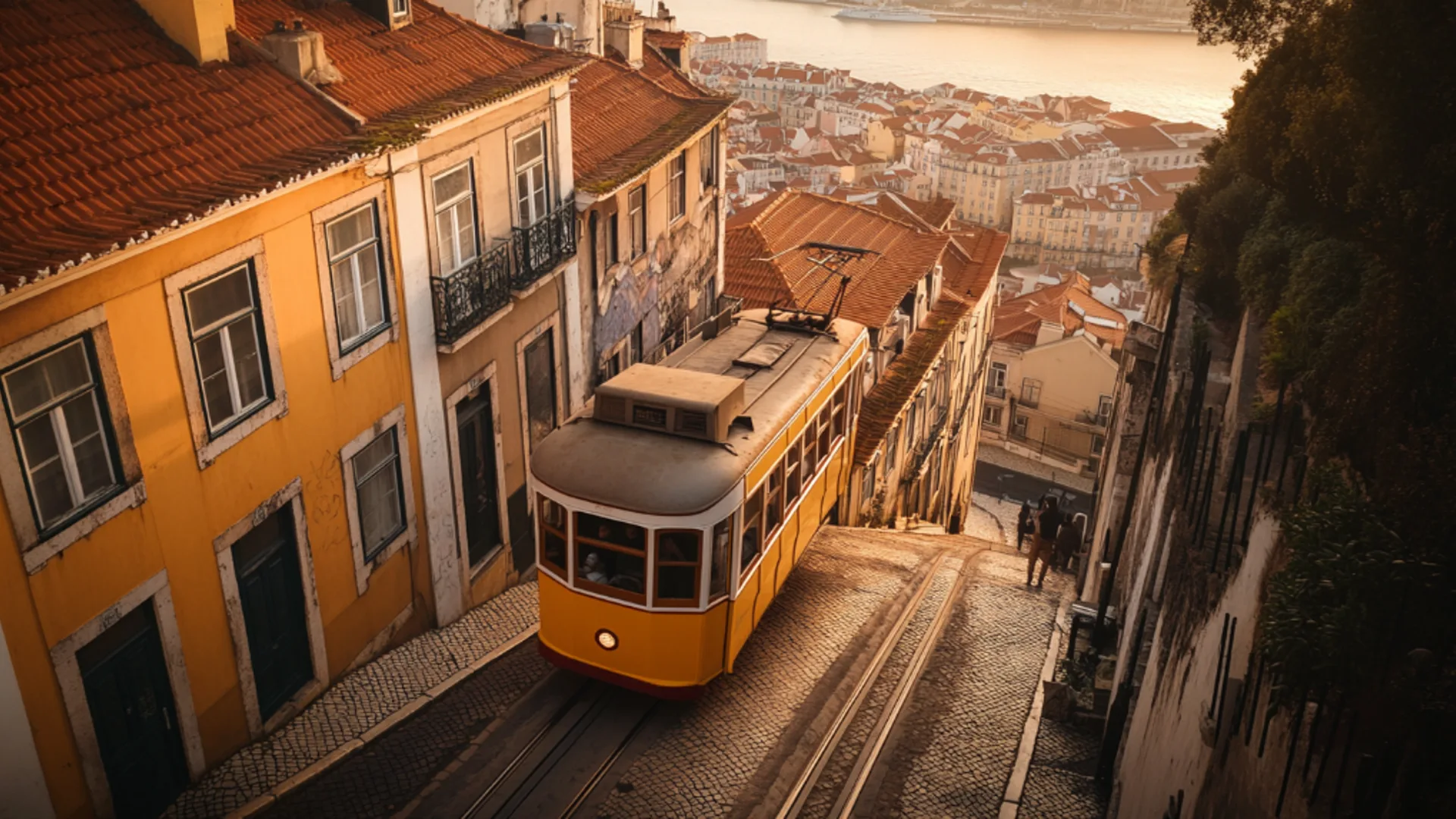
Lisbon clings to its hills, creating a city of constant reveals. The 1755 earthquake flattened one neighborhood into a rational grid (Baixa), leaving the ancient Moorish labyrinth of Alfama intact beside it. This is the city's core tension: the planned and the grown, the grid and the tangle, all cascading down to the Tejo river.
The beautiful black-and-white cobblestones, 'calçada portuguesa', are treacherous. They are polished by rain and foot traffic into slick, ankle-twisting surfaces.
Tram 28 is a pickpocket's paradise disguised as a tourist attraction. Walk, or use the city's 'elevadores' (funiculars) to conquer the hills.
The 'gaiola pombalina', an earthquake-resistant wooden framework inside masonry, was invented here after 1755, making Lisbon a pioneer in seismic engineering.
Every pick, at a glance
From your private terrace, watch Lisbon's oldest neighborhood cascade below. The view is crowned by a red infinity pool appearing to merge with the silver Tejo river.
AlfamaSleep inside a poem. Each floor is dedicated to one of Fernando Pessoa's literary alter egos, with his prose lining the walls.
Baixa & ChiadoA 15th-century palace where contemporary design meets original stone walls, high in the Alfama labyrinth near the castle.
AlfamaEduardo Souto de Moura's design masterpiece, crowned by a rooftop bar with an unrivalled panorama over the Baixa grid and river.
Bairro Alto & Principe RealThere is no menu. Just sit at the marble counter and trust whatever chef André Magalhães brought from the market this morning.
Baixa & ChiadoGet the Bacalhau à Brás. This is tasca cooking that hasn't changed in generations, served under ancient azulejo tiles in Mouraria.
MourariaThe perfect bifana—garlic-and-wine-marinated pork—served from a literal window in Alfama. This is Lisbon's soul in a sandwich.
AlfamaThe original, since 1837. The secret recipe means the pastry is flakier, the custard warmer, and the line longer than any other.
BelemHave a quick 'bica' (espresso) at the zinc counter like a local, or sit with Pessoa's bronze statue on the terrace where he once wrote.
Baixa & ChiadoA shot of sour cherry liqueur from a hole-in-the-wall that hasn't changed since 1840. Get it 'com elas' (with the boozy cherry).
Baixa & ChiadoOrder a simple gin and tonic and wander through five rooms filled floor-to-ceiling with curious collections, from military helmets to vintage dolls.
Bairro Alto & Principe RealA former brothel on Pink Street turned unapologetically decadent cocktail bar, complete with red velvet, erotic art, and burlesque shows.
Baixa & ChiadoLisbon's most respected craft beer, brewed on-site in an industrial Marvila warehouse. The Finisterra IPA is the city's standard-bearer.
Beato & MarvilaVasco da Gama's tomb lies under a canopy of limestone carved to look like ship's ropes and coral. A monument to a maritime empire.
BelemThe treasure is a 23-meter-long tile panel of Lisbon before the earthquake, a ghost map of a city that no longer exists.
XabregasClimb to the dome's terrace for a sweeping Alfama view that rivals the castle's, but without the queues. Amália Rodrigues's tomb is inside.
AlfamaA sublime private collection where Rembrandt hangs near ancient Egyptian artifacts in a modernist garden oasis. A civilized escape.
São SebastiãoThe most honest fado in Bairro Alto. Singers emerge from the crowd, the wine is cheap, and silence is mandatory when the music starts.
Bairro Alto & Principe RealHear fado in a former chapel, surrounded by 17th-century azulejo tiles. The acoustics are sacred, the experience profound.
AlfamaDJs spin above the Carmo ruins while the Castelo and the Tagus glow below. Weekend sunsets here are Lisbon at its most panoramic.
Baixa & Chiado- Wear shoes with good grip. The 'calçada portuguesa' cobblestones are beautiful but notoriously slippery, especially after rain.
- Walk, don't ride the tourist-packed Tram 28. Use the city's 'elevadores' (funiculars) like Gloria and Bica to conquer the steepest hills.
- Learn the coffee code: a 'bica' is an espresso, a 'galão' is a latte in a glass. Stand at the counter to pay the lower local price.
- For Pastéis de Belém, go right at the 8am opening to beat the queue and get them warm from the oven. Ask for 'canela' (cinnamon).
- Cash is essential for small tascas, tipping musicians, and buying from market stalls. Don't rely solely on cards.
- Most museums and some monuments are closed on Mondays. Plan your visits to the Gulbenkian or Panteão Nacional accordingly.
Where Things Are
Four neighborhoods to orient your first visit
Alfama
Oldest layer of the city. Labyrinth streets under the castle shadow, fado houses locals actually attend, morning markets, and the particular light that only survives in places the earthquake missed.
Baixa & Chiado
The grid the earthquake made. Pombaline architecture, literary cafes, tiled facades, Pessoa's ghost at A Brasileira, and the commercial heart that connects river to hilltop.
Bairro Alto & Principe Real
Split personality: bohemian bars and fado houses above, elegant gardens and concept stores below. Night and day literally — Bairro Alto is dead by noon and deafening by midnight.
Belem
River mouth, monuments, and the pasteis factory. Lisbon's showpiece of discovery-era ambition but also where the city exhales — wider skies, the Tejo opening toward the Atlantic.