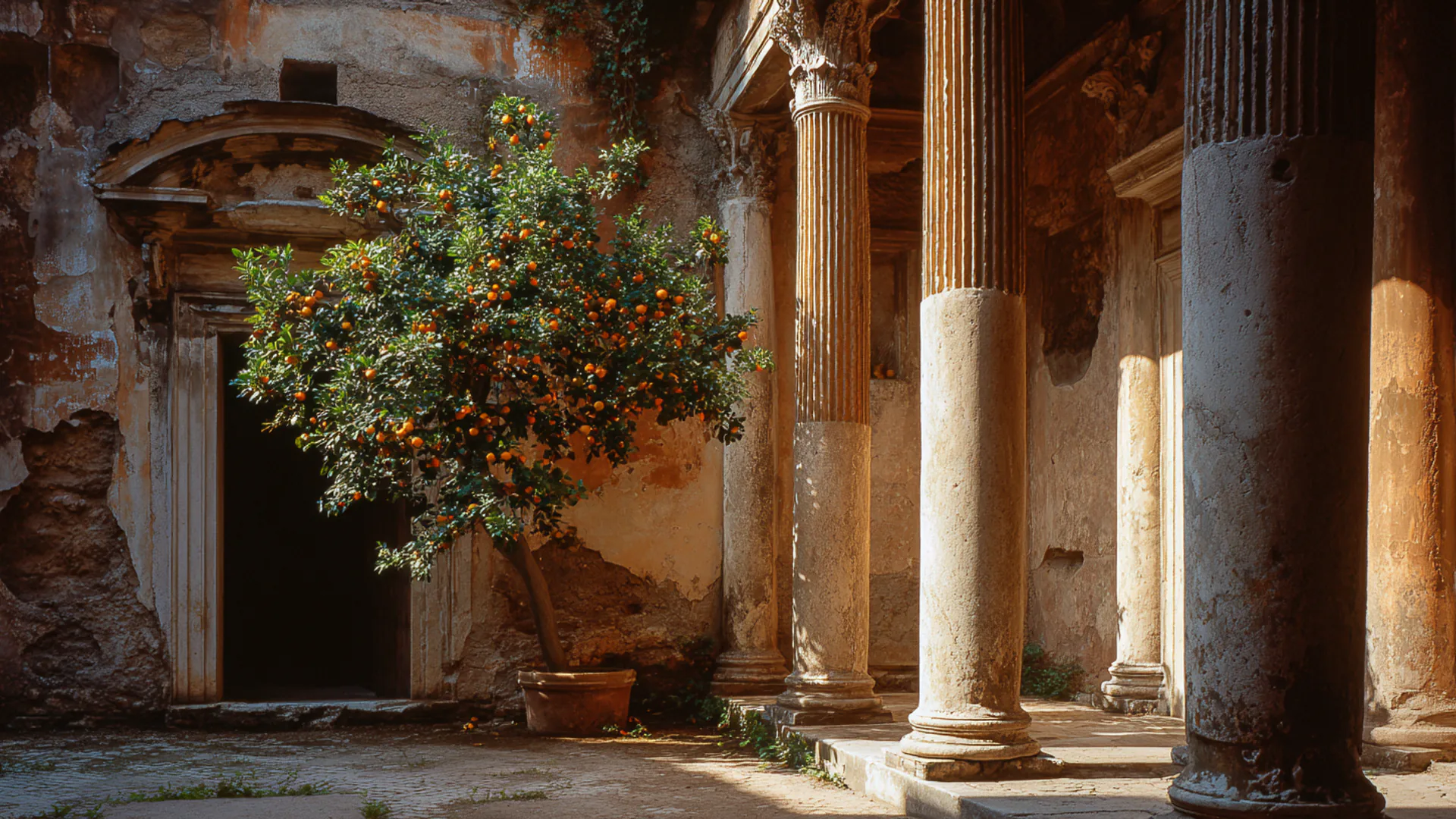
Columns become doorframes, Vespas thread through alleys, and around the corner, someone serves espresso from a bar older than most countries. You cannot see it all. The trick is to listen: to the echo under an arch, the slap of shoes on worn steps, the way a piazza quiets at noon and explodes at dusk.
Supplì — fried rice balls with a molten mozzarella center — are sold at pizza al taglio shops for two euros. Order them 'al telefono': the cheese stretches like a phone cord.
Many of Rome's great speakeasies hide in plain sight — behind working barbershops or heavy curtains that require a password.
The four canonical pastas — Carbonara, Amatriciana, Gricia, Cacio e Pepe — are a Roman loyalty oath. Each trattoria stakes its reputation on at least one.
Every pick, at a glance
A hotel scaled to a conversation, with fifteen rooms tucked into the walkable, least performative streets of Monti.
Monti17th-century frescoes meet mid-century Italian design. The roughness is the luxury in this palazzo on Piazza di Pasquino.
Centro Storico / NavonaWhere Regola's grit meets contemporary art. This is the crease of Rome most people miss between Campo de' Fiori and the Ghetto.
RegolaFind Rocco Forte's terraced courtyard, an oasis between the Spanish Steps and Piazza del Popolo. Order a drink at the Stravinskij Bar at sunset.
Piazza del PopoloThe cacio e pepe is not a dish, but a performance, finished tableside with the quiet confidence of a man who has done it ten thousand times.
TestaccioGabriele Bonci treated pizza al taglio as a canvas for his 72-hour dough. Point at whatever looks freshest; you cannot go wrong.
Cipro / VaticanThe carbonara is flawless, the queue is constant, and reservations are not accepted. Join the line; it's a Trastevere rite of passage.
TrastevereSteps from the Pantheon, three generations of the Gargioli family have run this trattoria since 1961, insisting on Roman tradition and fried artichokes.
PantheonThe wood-roasted espresso comes with a thick, secret crema that has fueled the Piazza Sant'Eustachio since 1938. Stand at the back and watch the mystery unfold.
Centro StoricoRome's modern cocktail scene caught fire with the arrival of the Jerry Thomas Speakeasy, where getting in is part of the experience. After reserving, you'll need to find the intercom and give the password to enter.
Centro StoricoA former mechanic's garage—'brakes and clutches'—where aperitivo comes with the volume turned up and Negronis are poured strong and fast.
TrastevereWhat did you come here for?' asks the name. The answer is a rotating tap list of Italy's best craft beer, served in a room barely wider than a corridor.
TrastevereOn the tourist-saturated Campo de' Fiori, this small vineria pours defiant natural wines for a crowd of locals who ignore the chaos outside.
Campo de' FioriFive centuries of papal art in 54 galleries, culminating in the Sistine Chapel. Book weeks in advance, then accept the beautiful, overwhelming chaos.
VaticanoBernini sculptures and Caravaggio paintings in a 17th-century villa. Reservations are mandatory and sell out weeks in advance; the intimacy is the reward.
Villa BorgheseWhere Romulus supposedly founded the city. Walk the ruins of imperial palaces for golden hour light and sweeping views of the Forum below.
PalatinoWalk past the ivy-choked facades until you find the mosaic glow of Santa Maria. It's the city's living room; bring a bottle of Peroni and a sense of drift.
TrastevereA former wool factory in an industrial neighborhood, now a raw space for Rome's creative underground. Check the program; expect anything from techno to theater.
PietralataA working barbershop on Via Panisperna conceals a speakeasy behind its mirrors. The password gets you in for live jazz and classic cocktails.
Monti- Order coffee at the bar ('al banco'). It's cheaper and how locals do it. Sitting at a table ('al tavolo') often doubles the price.
- Book tickets for the Vatican Museums and Villa Borghese weeks, or even months, in advance. They are not optional.
- Check your bill in Rome for a 'servizio' (service) charge, as tipping is often already included. If the service was special, leaving a couple of extra euros on the table is a fine local custom.
- Do not order a cappuccino after 11 a.m. It is considered a breakfast drink. An espresso or macchiato is the correct afternoon choice.
- Piazzas are not just pass-throughs; they are destinations. Sit, order an Aperol Spritz or even just water, and watch the city live.
- The 'coperto' (cover charge) on your bill is for bread and the place setting. It is not a scam.
Where Things Are
Four neighborhoods to orient your first visit
Trastevere
Ivy-draped alleys, trattorias, and the city's best aperitivo scene across the Tiber.
Monti
Rome's original bohemian quarter: vintage shops, wine bars, and quiet piazzas.
Testaccio
Working-class roots, the best Roman food, and a market that locals defend fiercely.
Centro Storico / Navona
Baroque piazzas, narrow lanes, and the living room of the city since the Renaissance.