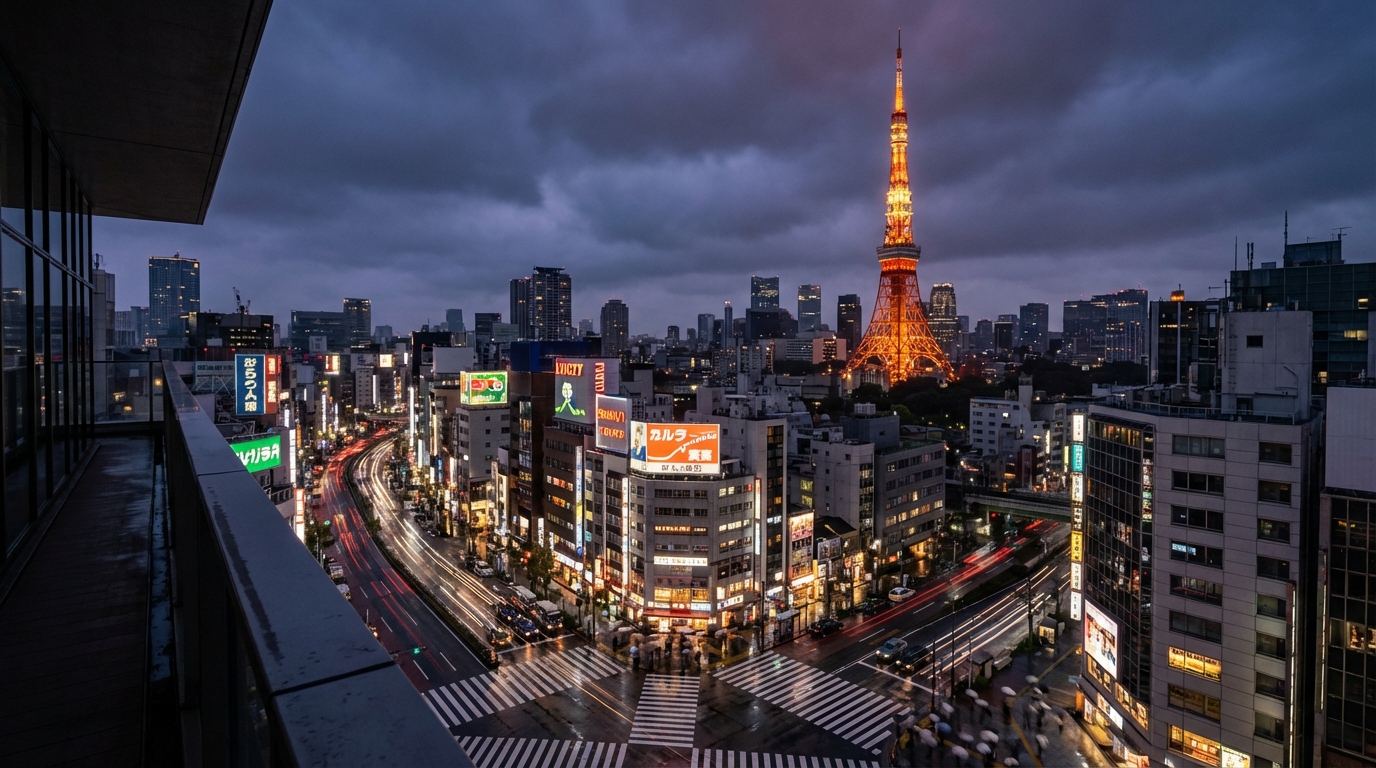
Tokyo is not a city; it's a collection of cities connected by the world's most precise train system. Each stop on the Yamanote line is a universe with its own logic — from the neon canyons of Shinjuku to the pre-war calm of Yanaka. The most important encounters happen at a counter, a slab of wood where a person who has mastered one thing works directly in front of you.
The counter isn't a stage; it's a workbench where proximity creates accountability between maker and eater.
A 'shokunin' isn't just an artisan; it's someone who has surrendered to a single practice until the person and the process dissolve.
The last train, around midnight, organizes the city's entire social rhythm. Missing it is a commitment.
Every pick, at a glance
The hotel from 'Lost in Translation,' yes, but more importantly, a Kenzo Tange tower where your window frames either Fuji or the world's greatest urban sprawl.
ShinjukuA ryokan, built vertically. You take your shoes off in the lobby and soak in an open-air onsen on the 17th floor, surrounded by the financial district.
OtemachiA hotel as a neighborhood commons on Cat Street. The boundary between the lobby bar and the city is intentionally, beautifully blurred.
ShibuyaThe celebrated 1962 lobby, a masterpiece of Japanese modernism, was meticulously recreated. You are staying inside a piece of design history.
ToranomonChef Narisawa's 'Satoyama' cuisine, where you eat the landscape. A loaf of bread is baked at your table using stones and forest yeast.
Minami-AoyamaThe solo ramen pilgrimage. In your private booth, you customize every variable, and a perfect bowl of tonkotsu appears from behind a bamboo screen.
ShibuyaIn a converted 1960s bathhouse, they serve kurobuta pork so tender you are told you can cut it with your chopsticks. They are not lying.
Harajuku / OmotesandoA 1938 kissaten in Yanaka that feels like a film set. Order the egg salad sandwich on fluffy milk bread and a hand-dripped, dark-roast coffee.
YanakaKaiseki with a sense of humor. The 'Dentucky Fried Chicken' wing, served in a fast-food box with a tiny flag, is the most joyful and delicious bite in town.
Harajuku / OmotesandoThere is no menu. Ueno-san asks about your day, then creates a drink that is the answer. The ice is hand-carved into a diamond.
GinzaTwo hundred bars, most seating six people, crammed into post-war wooden alleys. It's a living ruin of a Tokyo that no longer exists, and it serves alcohol.
ShinjukuA cocktail omakase of four or six drinks, each built around a single, perfect piece of seasonal Japanese produce. A meditation at an eight-seat cypress counter.
Azabu-JubanA library of over 300 Japanese whiskies in a tiny room that silently plays old black-and-white films. Ask the bartender to pour you a history lesson.
ShinjukuPass through the Thunder Gate and its giant red lantern to find Tokyo's oldest temple, founded in 645 AD. Go at dawn, before the crowds, when it still feels ancient.
AsakusaAn ocean of light, a forest of lamps, a cascade of digital flowers that bloom and die. The art flows between rooms and reacts to your presence.
RoppongiThe inner market moved, but the soul stayed. Four hundred stalls of energy, where you eat tamagoyaki on a stick and buy the perfect chef's knife.
TsukijiA 170-acre forest, planted by hand a century ago, shields the city from a shrine. The walk down the gravel path is a transition from urban noise to sacred quiet.
Harajuku / OmotesandoPoliteness is mandatory, even when the techno peaks.
Deep, velvet-wrapped house beats and the low-frequency thrum of Shibuya’s most intimate dancefloor.
ShibuyaA Shinjuku labyrinth where every six-seat door hides a different era of Japanese punk or static-heavy jazz.
Shinjuku- Get a Suica or Pasmo card immediately. It's your key to trains, vending machines, and convenience stores. Frictionless movement is everything.
- The last train is a hard deadline, usually around midnight. Plan your night around it or be prepared for an expensive taxi or an all-night solution.
- Many of the best restaurants and bars are on the upper floors of non-descript buildings. Look up, and trust the address.
- Cash is not dead. Many smaller bars, ramen shops, and temples require it. Always carry some yen.
- The cover charge ('otoshi') in tiny bars like those in Golden Gai is not a scam. It's a seating fee that often includes a small snack and keeps the lights on.
Where Things Are
Four neighborhoods to orient your first visit
Shinjuku
Neon canyons and Golden Gai's postwar drinking alleys, department stores with depachika food halls beneath them, the metropolitan government's free observation deck, and the busiest train station on earth moving 3.5 million people daily.
Shibuya
The crossing, the youth culture engine, Nonbei Yokocho's tiny surviving bars behind the station, and a district in constant reinvention — Shibuya Sky, Miyashita Park, the scramble that defines Tokyo's global image.
Ginza
Tokyo's luxury quarter — Chuo-dori's flagship stores, intimate cocktail bars with hand-carved ice, sushi counters where the omakase is a private performance, and the depachika food halls beneath Mitsukoshi and Matsuya.
Harajuku / Omotesando
Street fashion meets shrine forest meets architectural showcase — Takeshita-dori's candy-coloured chaos gives way to Omotesando's designer flagships by Ando, SANAA, Ito, and Herzog & de Meuron, and behind it all, the 170-acre forest of Meiji Shrine.