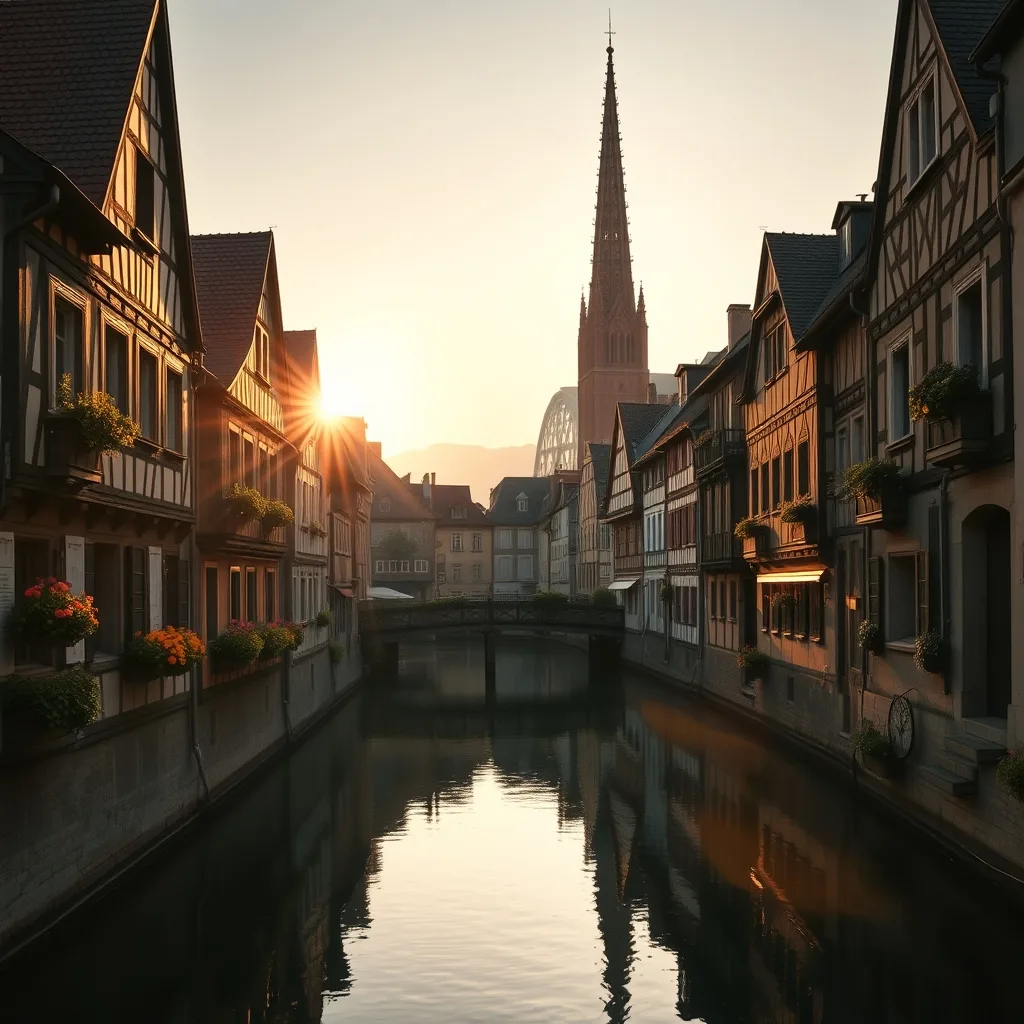
Strasbourg is French and German at once, and has been claimed by both often enough that the city stopped choosing. The Grande Île — the whole historic centre, ringed by the Ill — carries World Heritage status as a single unit, with the cathedral's lone pink sandstone spire visible from every rooftop and half the Rhine plain. West of it, Petite France's tanners' houses lean over the canals; south, Krutenau drinks where the students do. The food is Alsatian before it is French: choucroute, baeckeoffe, tarte flambée, and beer taken as seriously as wine.
The cathedral's astronomical clock performs once daily at 12:30 — a separate small ticket, and worth timing the morning around.
A winstub is an Alsatian wine tavern, not a French bistro. Checked cloths, dark wood, choucroute — the format is regional and unapologetic.
The Barrage Vauban's rooftop terrace is free, uncrowded, and gives the best view in the city — most visitors walk past without knowing the stairs are inside.
Every pick, at a glance
The winstub of record, two minutes from the cathedral — choucroute and baeckeoffe served under dark wood to a room that has fed the city's establishment for generations.
Grande ÎleTwo Michelin stars and a name borrowed from a stuffed crocodile a Napoleonic officer hung in the dining room. The most serious dinner in Strasbourg.
Grande ÎleA 16th-century tanners' house with a terrace hanging directly over the Petite France canal — the view is doing half the work, and nobody minds.
Petite FranceA genuine 17th-century farmhouse moved beam by beam into the Orangerie park, now holding two stars. Alsatian roots under modern French technique.
Parc de l'OrangerieNamed for the laundry lines once strung between the half-timbered houses — good-value Alsatian plates on Petite France's prettiest square.
Petite FranceStrasbourg's own brewpub, brewing on site — the house beer is why you come, the tarte flambée is why you stay for a second.
Grande ÎleA serious beer bar two streets from the cathedral, running deep into Alsatian and Belgian craft — ask the staff, the printed list lags the taps.
Grande ÎleDozens of bottles and a rotating tap list near Petite France — unpolished, regular-driven, and unconcerned with looking the part.
Grande ÎleA single 142-metre spire that was the tallest building on earth for over two centuries, and an astronomical clock that still draws a crowd at 12:30.
Grande ÎleThree medieval towers guarding the Ill's channels — 'covered' in name only since the roofs went, and free to walk at any hour.
Petite FranceThe most photographed timber-framed building in France — 1427, seventy-five-plus panes, every beam carved with biblical figures, facing the cathedral.
Grande ÎleThe prince-bishops' 18th-century palace, three museums behind one restrained facade — and far quieter than the cathedral two minutes away.
Grande Île- Order beer, not wine, unless the wine is Alsatian. This is brewing country — and the local Rieslings and Gewürztraminers are white, dry and nothing like their German-label reputation.
- A tarte flambée (flammekueche) is not a pizza. Thin, cream-and-onion-and-lardon, ordered by the round and shared — nobody eats one alone.
- The Barrage Vauban rooftop is free and the stairs are inside the building. It beats every paid viewpoint in the city.
- Strasbourg is small: the cathedral to Petite France is a ten-minute walk. Ignore the tram for the historic centre; use it only for the Parliament or the Orangerie.
- The Christmas market (Christkindelsmärik, running since 1570) transforms — and completely books out — the city from late November. Plan months ahead or avoid deliberately.
A 16th-century coaching inn around a timber-galleried courtyard — Goethe reputedly stayed; ask for a courtyard-facing room.
Grande ÎleA 19th-century ice factory on the canal, converted without losing the iron columns — canal-view rooms put Petite France outside the window.
Petite FranceWhere Things Are
Four neighborhoods to orient your first visit
Grande Île
The UNESCO-listed old-town island cradled by the Ill — the whole reason Strasbourg's historic centre carries World Heritage status. The cathedral's single spire dominates every rooftop view, Place Kléber anchors the shopping streets, and the Palais Rohan sits where prince-bishops once ruled Alsace. Dense, walkable, and the spine every visit to the city runs through.
Petite France
The old tanners' and millers' quarter at the Ill's western tip, where half-timbered houses lean over the canals and the Ponts Couverts' medieval towers still guard the water. The most photographed corner of Strasbourg, and deservedly so — flower boxes, weirs, and the Barrage Vauban's rooftop terrace over the whole postcard view.
Krutenau
The student and nightlife quarter just south of the Grande Île, across a narrow arm of the Ill — a working neighbourhood of independent bars, cheap eats and a livelier, younger register than the postcard core a few minutes' walk away. Less photographed, more genuinely lived-in.