Labyrinth and Grid
Two maps overlap here. Barri Gòtic winds in tight alleys, walls leaning close, the past tucked into courtyards. Eixample stretches wide, intersections cut at 45 degrees, light entering from all sides. Walk from one to the other and you feel a shift in time and logic. The city lets both coexist; you choose your chapter each morning.
Between them stands Via Laietana, a line that feels like a page break. Cross it and the typography changes: serif stone to sans-serif glass, gargoyles to rooftop pools. The pleasure is in the transition.
Light on Stone, Color on Tile
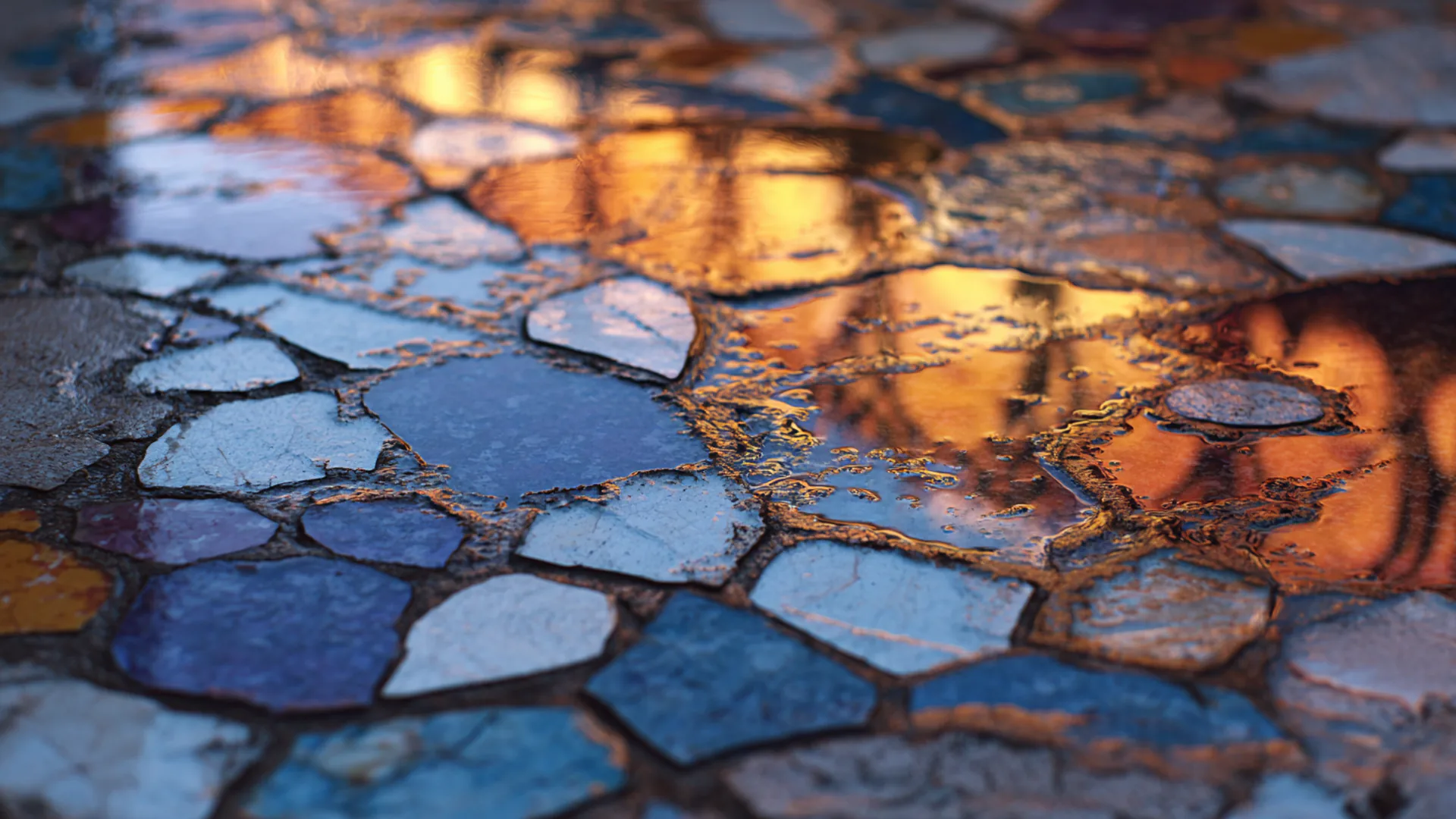
Barcelona’s light arrives off the sea, reflects off pale stone, and gets caught in colored tile. Mosaics climb facades, dragons grip balconies, ceramic roses bloom above doorways. Morning light flatters the old town; late afternoon sharpens Eixample’s lines. Even on cloudy days, interiors glow from courtyards hidden behind heavy wooden doors.
Look down and you see panot tiles in Eixample—floral hexagons repeating underfoot. Look up and you catch wrought iron twisting around balconies like sentences looping back on themselves.
The Sea as Margin
The Mediterranean is the city’s outer margin and its reset button. Barceloneta pulls crowds to sand and paella; Mar Bella offers quieter stretches for sunrise swims. The promenade runs like an unbroken sentence from W Hotel past Olympic Port to Poblenou’s calmer shores. Cyclists, runners, skaters, and strollers share the line, all drawn by salt air.
In winter, the beach returns to locals—fishermen at dawn, dog walkers at dusk. In summer, it becomes a festival of umbrellas and coolers. The sea reminds the city that space can be open and horizon wide, even when the alleys tighten.
Modernism as Argument
Modernisme is not decoration; it’s conviction in stone and glass. Casa Batlló’s bones curve like sea creatures, La Pedrera ripples in stone, Palau de la Música Catalana hides a riot of stained glass behind a modest facade. Sagrada Família continues to grow, cranes part of the skyline like punctuation marks in a sentence not yet finished.
These buildings insist that function and fantasy can share a staircase. They ask you to slow down, to read the details: a handrail like a wave, a tile like a blossom. They make walking Eixample feel like moving through an illustrated text.
Markets and Appetite
Mercat de la Boqueria is the headline—bright stalls, tourists with cameras, chefs buying early. Santa Caterina offers a wavy roof of colored tiles and calmer aisles. Sant Antoni’s iron hall mixes produce with Sunday book markets. Poblenou and Gràcia keep neighborhood markets humming with fish on ice, cured meats, and fruit that smells ripe.
Food is daily ritual: pa amb tomàquet at breakfast, anchovies and vermut at noon, arroz or fideuà by the sea, pintxos on Blai, calçots in season. Barcelona eats with both tradition and curiosity; natural wine bars sit beside bodegas selling bulk vermut. The appetite is broad and loyal.
Work and Pause
Barcelona works early and late. Offices fill by nine, terraces by two, gyms by seven. Lunch can be quick menú del día or a long sobremesa that stretches productivity into conversation. Afternoons may dip; a cortado revives. Remote workers fill cafés in Poblenou and Sant Antoni, laptops balanced beside cortados.
Even with hustle, pause is built in: a 10-minute vermut, a stroll through a market on the way home, a quick dip in the sea. The city believes breaks are investments, not interruptions.
Night and the Echo
Nights here are layered. Early evening is families on promenades, kids playing in plazas. Later, bars in El Born and Poble-sec fill with low conversation and clinking glasses. Later still, Raval basements and Poblenou warehouses pulse with electronic sets. The city does not force you into one lane; it offers multiple volumes.
After midnight, narrow streets amplify footsteps and laughter. Respect the residents; voices carry. The best nights often end with a quiet walk toward the sea, where the city’s echo softens against the water.
Hills as Footnotes
Montjuïc and Tibidabo sit like footnotes explaining the city from above. Montjuïc gives gardens, museums, and a castle overlooking the port. Its cemeteries and Olympic structures remind you of different eras folded into one hill. Tibidabo, with its funicular and retro amusement park, offers a view that flattens the grid into a carpet of lights.
Climb either at dusk for the city in gradient. The hills are not escapes; they are mirrors. They show you how dense and how open Barcelona can be at once.
Language and Cadence
Catalan and Spanish braid daily conversation. Signs appear in both; menus too. A bon dia earns a smile, a gràcies lands well. The city’s cadence comes from both languages, from the clipped rhythm of Catalan and the drawn vowels of Spanish. Listen long enough and you can tell which neighborhood you’re in by the mix.
English surfaces in hospitality, but the city appreciates effort. Language here is not gatekeeping; it is texture. Let it wash over you; pick up what you can.
Heat, Shade, and Time
Summer heat presses down around midday; locals slide into shade or into the sea. Awnings stretch over narrow streets, plane trees filter light along Passeig de Sant Joan, and the sea breeze becomes currency. Afternoon closures still happen in pockets; respect them. The city cools after eight, streets refill, and dinner becomes possible.
In winter, light stays low but kind. Terraces add blankets and heaters; the sea remains a companion rather than a destination. Barcelona modulates with the weather; if you follow its tempo, you avoid the worst glare and find the best tables.
Transport, Lines and Curves
The metro is efficient and cool, buses fill gaps, and trams glide quietly toward the coast. Biking is increasingly safe with protected lanes, especially along the beach and through Eixample. Walking works best for the old town and Gràcia, where streets narrow and cars surrender.
Expect strikes occasionally; the city adapts with scooters and extra time. Distances look long on the map but shrink on foot—Eixample blocks are predictable, and the sea is a constant reference point. Use the funicular to Montjuïc when legs protest. Carry a charged card; the T-casual keeps trips simple.
Festivals and Fire
Barcelona loves organized chaos. Festes de Gràcia turns streets into themed art pieces built by neighbors. La Mercè fills plazas with music, castellers building human towers, and correfoc fire runs where devils shower sparks over crowds. Sant Jordi covers the city in books and roses, a literary Valentine’s Day.
These events rewrite familiar streets for a few days, then return them. Join with respect: wear cotton for correfoc, make space for castellers, buy a book and a rose for someone (or yourself) on Sant Jordi.
Rooftops and Lines of Sight
Rooftops offer another index to the city. From the Cathedral terrace you see the sea and cranes; from MNAC on Montjuïc, Eixample looks like a perfect grid stretching to the horizon. Hotel bars in Eixample and El Born open their decks to outsiders—buy a drink, earn a view.
At sunset, the skyline stacks layers: cranes at Sagrada Família, W Hotel’s curve, Montjuïc’s silhouette. Rooftops remind you Barcelona is compact yet dense with stories, each block a paragraph you can reread.
Soundtracks and Skate
Barcelona sounds like skateboard wheels on MACBA marble, conversations echoing in interior patios, and waves hitting breakwaters beyond Barceloneta. Buskers play near Santa Maria del Mar, drummers rehearse in Ciutadella, and summer festivals layer music over everything. Even the metro adds its own chime to the score.
Skate culture is woven into public space—ledges, plazas, and smooth tiles become arenas after sunset. Respect shared use: pedestrians get space, skaters get lines, everyone gets the soundtrack. The city tolerates this dance because it understands movement is part of its identity. Even if you never step on a board, the rhythm finds you.
Screens and Light
Barcelona's cinema culture splits between institutional weight and neighbourhood warmth. The Filmoteca de Catalunya in the Raval — Catalonia's national film archive, housed in a striking modern building on Plaça de Salvador Seguí — programmes with the curatorial ambition of a national institution: Catalan and Spanish film history, international retrospectives, experimental work, and complete filmmaker seasons screened for an audience that expects the same seriousness from their cinema that they bring to their architecture and their cooking. The Raval location, between the MACBA and the CCCB, means a day can move from contemporary art to restored Buñuel without crossing a major avenue.
Cine Verdi in Gràcia represents the other pole — a neighbourhood arthouse that has been screening films in original version since 1983, nine screens deep in a district that treats independence as a civic virtue. The audience is local, the programming international, and the evening ritual of film followed by dinner on Carrer de Verdi or drinks in Plaça del Sol is one of Barcelona's most reliable cultural pleasures. Between the Filmoteca's institutional curation and Verdi's neighbourhood loyalty, Barcelona sustains a film culture that does not need a festival to justify its attention — though the Sitges Film Festival (fantasy and horror, October) and the Barcelona International Film Festival add seasonal intensity to a year-round habit.
Water and Green
Beyond the beach, Parc de la Ciutadella and Parc de Montjuïc give shade and ponds; Turó Park and Parc del Guinardó offer neighborhood calm. Even small squares plant orange trees and palms. Fountains and public taps keep walkers alive in summer.
Water shows up inland too: fountains in Eixample courtyards, the ponds at Sagrada Família, the mist by the Forum in August. The city keeps green and water in reach to balance the stone and glass.
Day Trips in the Margin
Trains leave Sants and Arc de Triomf to Sitges, Girona, Cadaqués, Montserrat. In under an hour you can be on a different coastline or at a monastery on a serrated mountain. Return the same evening and the city feels both familiar and new.
Even inside Barcelona, changing neighborhoods can feel like a day trip: the village pace of Gràcia after the grid of Eixample, the industrial echoes of Poblenou after the medieval tangle of Born. Small shifts, big effects.
Departures and Returns
Leaving often means one last cortado at the bar, one final look at the sea from Barceloneta, or a slow walk down Passeig de Sant Joan under plane trees. The airport is close; trains run often. The city does not dramatize farewells. It trusts you’ll reread its pages.
You go with mosaic memories: tile patterns, the taste of pa amb tomàquet, the sound of a skateboard in MACBA’s plaza, the smell of the sea at night. Barcelona is a book you close knowing you didn’t catch every story. That is the point.