City Guide

New Orleans

USA - 8 neighborhoods

Start Here72 Hours

First time in New Orleans?

A curated 3-day itinerary covering the essential experiences — from historic cocktails to live jazz, oak-lined streets to local secrets.

Where Clocks Melt and Brass Keeps Time

New Orleans begins with humidity that sits on your shoulders like an old friend who refuses to leave. The air tastes of powdered sugar and diesel, brass and salt. You land here and the clocks change speed, and the streetlights murmur stories whether you listen or not. Cats move along wrought-iron balconies like soft punctuation. The city is not selling nostalgia; it is showing you how memory can be a room you walk through, spill a drink in, and leave the door open for whoever wanders in next.

This is a city held between a crescent river and a shallow lake, between levees and the long, slow breath of the Gulf. Boundaries are ideas here, not guarantees; water edits the map whenever it likes. You feel that soft risk in the way people talk, in how the street grid bends around invisible pasts. You take the St. Claude bus and see shotgun houses lean into one another as if sharing secrets, murals blinking under magnolia shade, boats parked on trailers in front yards like talismans.

Late-night neon does not eclipse morning rituals. Street sweepers collect the evidence of the night, cafe counters refill mugs without ceremony, and a neighbor waters ferns as if coaxing them through another summer. The tempo is unhurried but never idle; it is the rhythm of a city that knows every day can surprise and still insists on opening the shutters. You feel both invited and tested—can you keep pace with a place that moves at multiple speeds at once?

Sound as Infrastructure

Sound is a public utility here. Brass bands rehearse in parking lots, in living rooms, under the Claiborne overpass where concrete became columns after the highway took a neighborhood's spine. A trumpet riff can rearrange your agenda faster than any calendar. You might step off the streetcar because you hear a second line turning the corner, drums cutting through traffic, tubas chasing humidity out of the way. Strangers fall into step, hands on hips, umbrellas spinning, the line expanding and contracting like a living lung.

Even the quiet is tuned. Ceiling fans hum in 6/8 time, cicadas add a backbeat in late summer, and the river pushes a low drone that sits under everything. Music is not a scheduled event; it is civic infrastructure that repairs mood and memory. When the right song hits, strangers become a temporary family and then scatter, leaving only brass in your ears.

Hospitality With Teeth

Hospitality here is thick, not performative. Someone will hand you a bowl of gumbo and then critique the roux with affectionate precision. Beignets arrive as a small snowfall, po-boys as architecture, oysters as a gamble with the Gulf. The city feeds you to slow you down. You will taste decades in a bowl of red beans and rice on a Monday and realize the calendar tastes smoky. Coffee comes with chicory to remind you bitterness has its own sweetness. Everyone has an opinion about where to get the best Sazerac, and all of them are right.

A Patchwork That Refuses to Flatten

The city is layered like a vinyl crate in a used record shop. French, Spanish, Haitian, West African, Vietnamese, Sicilian, Indigenous, Midwestern transplants who came for a weekend and never left. The layers are not a museum display; they are still arguing in kitchens and block parties. You feel it in the pronunciation of street names, in how "Tchoupitoulas" fits in the mouth, in how a bowl of pho sits beside a plate of crawfish without negotiation. History is not sealed; it seeps.

Architecture keeps the argument visible. Iron lacework drapes over pastel facades, cypress beams hold up shotgun houses, Creole cottages sit beside Brutalist mistakes. Porch culture is infrastructure; people occupy the threshold between private and public, narrating their own version of the city in real time. Nothing is smoothed out for the visitor, and that is the charm.

The Spanish Layer Most Guides Miss

Most guides treat the French identity like a headline and the Spanish identity like a footnote. That's backwards if you're walking the Quarter with your eyes open. Spain governed Louisiana for four decades, and two catastrophic fires—1788 and 1794—happened during the Spanish colonial era. Rebuilding after those fires pushed the Quarter toward brick-and-stucco structures, inner courtyards, iron railings, and a denser, more urban street wall. Less wooden colonial outpost, more Caribbean port city.

So when you're admiring the wrought-iron balconies and hidden courtyards, you're not seeing "French Quarter charm"—you're seeing the city's Spanish-Caribbean reboot. The Cabildo on Jackson Square was built under Spanish rule after the 1788 fire; it's central to the city's political story and worth your time. For a quieter nod, pause at Spanish Plaza on the riverfront, where tile mosaics trace the colonial connection.

Spain also brought people, including Isleños—Canary Islanders recruited during the Spanish period—another thread in the city's braided identity. The post-fire urban logic explains why the Quarter feels Mediterranean: thick walls for climate, carriageways leading to private courtyards, buildings pressed flush against sidewalks. Walk through a carriageway into one of those hidden courtyards and you'll understand history better than any museum plaque could explain.

Storms as Editors

Storms are chapters, not epilogues. The city keeps a ledger of waterlines on brick and memory. Ask anyone where they were in 2005 and the conversation will widen into policy, grief, and stubborn joy. Blue tarps become sky. Generator hum becomes lullaby. Resilience is neighbors gutting neighbors' houses, brass bands playing through FEMA paperwork, mutual aid shifting faster than any official plan. Hurricane season is a metronome that makes the whole city practice the discipline of paying attention.

Preparation is a ritual: freezer jugs turned into ice blocks, cars parked on higher neutral grounds, text threads lighting up with offers to help haul sandbags. You learn quickly that safety is collective, and that humor survives as another form of infrastructure when the wind rises.

Night Has Multiple Volumes

Bourbon Street is neon and daiquiri machines, but four blocks away the Quarter quiets into gaslamps and the rustle of palms. Frenchmen Street stretches like a reed instrument, packed with clubs where sets swap without ceremony. In Uptown, porch lights flicker as a different kind of nightlife—neighbors talking across railings, a dog snoring under a fan. The city lets you choose your volume. It offers anonymity and community in the same block, depending on whether you step into the music or keep walking.

Bars as Laboratories

A Sazerac is not a relic; it is a ritual, rye and absinthe and lemon oil aligning the night. A Ramos Gin Fizz is an arm workout and a promise. Bartenders treat recipes like oral histories, editing them with local humidity in mind. The ice matters, the glass matters, the way you are greeted matters. Expect Vietnamese basil, chicory bitters, or cane syrup pulled from a friend's backyard boil. Flavor is memory work disguised as a menu.

The Streetcar, A Moving Porch

The St. Charles streetcar feels like a time machine on rails. Wood benches, open windows, ceiling fans that complain in rhythm. It rattles from the CBD past the live oaks of the Garden District, past campuses where students read Baldwin and bounce beads off balconies. You ride it not for efficiency but for texture: rain on hot metal, the operator calling out "Car's moving" like a mantra. Transit doubles as theater; everyone is an actor and audience.

Courtyards as Portals

The French Quarter teaches you to distrust facades. A plain door on Royal hides a courtyard with fountains and jasmine, muffled conversations, a cat asleep on a wrought-iron chair. Look for narrow passages, for light leaking from alleyways, for the scent of chicory marking a side entrance. Balconies lean close enough to share gossip with strangers. The city rewards slowness; if you rush, you miss the portals. If you linger, you exit two hours later unsure what era it is.

Festivals Are Weather

Carnival stretches weeks, shaping the city's metabolism. Jazz Fest is both pilgrimage and neighborhood cookout. Second lines roll nearly every Sunday, honoring life with brass, beadwork, and sweat. The schedule is public but the feeling is intimate. Even funerals can become kinetic poems. Outsiders call it spectacle; locals call it Saturday. Participation is expected—clap, dance, make space, bring cash for the band.

River, Slow Protagonist

Stand on the Moonwalk and watch container ships move like apartment buildings, horns low and patient. The river smells industrial and vegetal at once. It curves around the city like an arm that can both hold and threaten. Walk the levee at dusk and the skyline looks fragile, tin roofs and steeples in silhouette. The port reminds you this is a working city, not just a postcard. The river gives fog in the morning and wind at night, and every plan you make should respect its mood.

Ferries stitch both banks together, carrying commuters, chefs, and kids with bikes. The water decides what patience means on any given day. Stand long enough and you'll notice pelicans timing their dives with the wakes, tugboats leaning into physics with quiet confidence. The river is a timekeeper and a warning wrapped in one slow, unstoppable flow.

Small City, Wide Stories

A ten-minute drive can take you from the brocade of the Garden District to the industrial graffiti of Bywater. Neighborhood identities are guarded like family recipes. You will be told where you should and should not park, which corner store makes the right snowball, which block will flood first if the rain keeps up. The city feels small because it is, but the stories are wide. Directions often use landmarks long demolished, because memory is also a map.

Days Have Their Own Weather

Morning belongs to delivery trucks, bakery lines, and runners tracing the bayou. Afternoons slow under heavy heat; museums, long lunches, and shaded porches dominate. Twilight wakes the brass, the patios, the river breeze. By midnight, the city edits itself again—kitchen crews clock out, bartenders clock in, and a new cast of characters takes over the same streets. Plan lightly; the day will change shape on its own.

People Carry the Map

Talk to the person at the corner store, the oyster shucker, the cab driver with thirty Carnival seasons in his eyes. They know where the parade will actually turn, which street will back up because of a freight train, which neutral ground drains first after a storm. The city is navigated by relationships as much as by GPS. Respect gets you better directions than any app.

Time Loops and Analog Hours

Happy hours start when the bartender arrives and end when they feel like it. Your phone battery drains faster in the humidity, which is the city's way of suggesting you look up. Analog watches gain or lose minutes after a night out, as if they were also listening to the brass section. Morning can feel like an epilogue or a preface depending on which side of Canal you wake on. The city has patience for wanderers and less patience for those who insist on punctuality over presence.

How to Read the City

Follow the mundane: where people buy ice, how they sweep stoops, what they talk about when the power flickers. Listen for train horns at night from across the river. Talk to the person making your po-boy about the Saints game and you'll get directions to three unmarked bars. Carry small bills for musicians. Say "y'all" sincerely. Accept that plans will change because a parade appeared. Let the city edit you.

In the end, New Orleans is not asking to be understood; it is asking to be felt. It gives you late-night fog on Decatur, early-morning birdsong in City Park, a foggy ferry ride to Algiers Point, a tarot reading that makes no sense and perfect sense at the same time. You will leave with powdered sugar on your shoes and a melody lodged behind your ribs. Weeks later, you'll hear a horn in another city and realize part of you stayed.

Neighborhoods

01

French Quarter

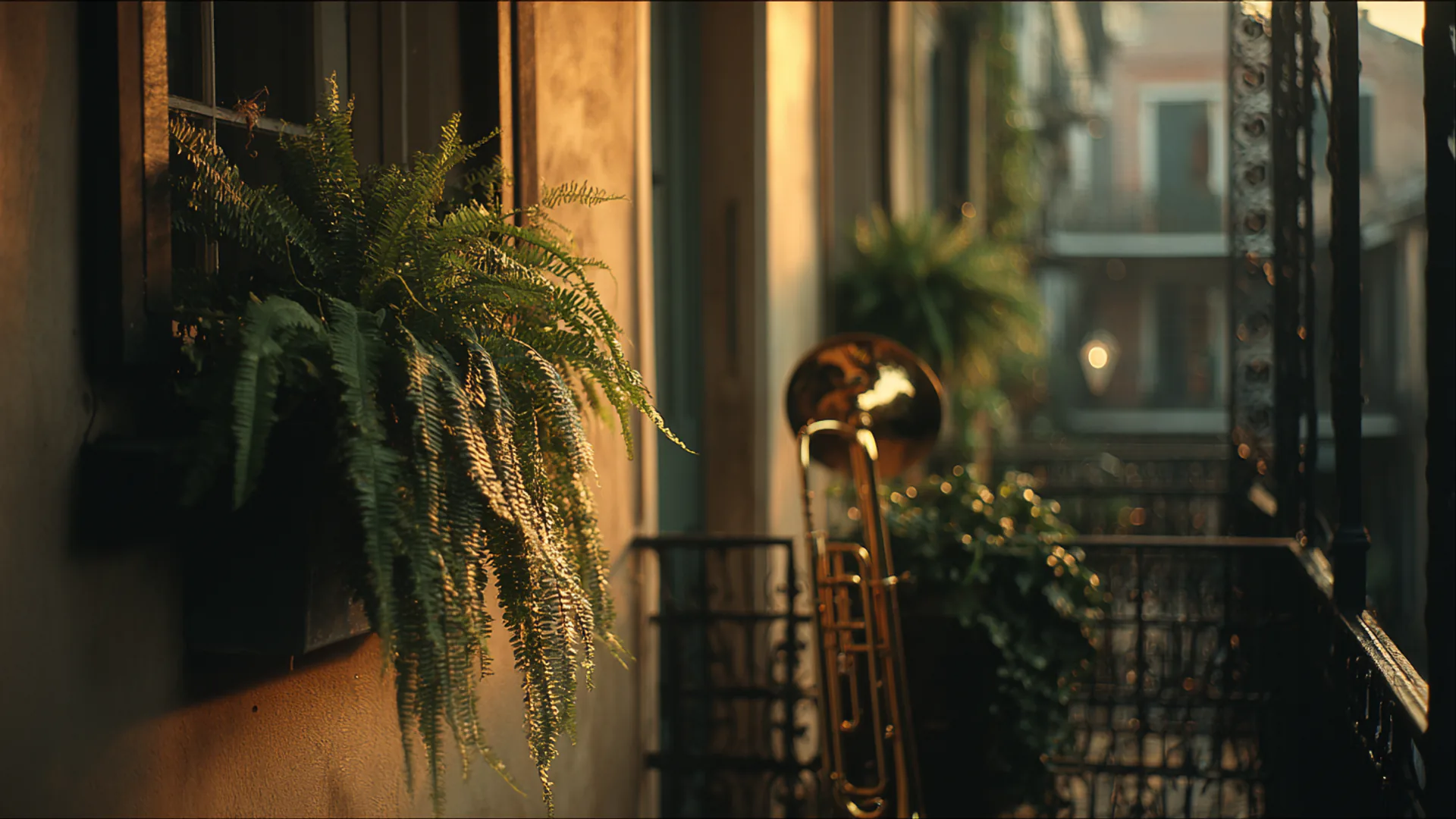
Tourist brochures flatten the French Quarter to Bourbon Street, but its core lives in the quieter blocks where balconies drip with ferns and locals slip through carriageways to shaded courtyards. Morning belongs to cafe noir and powdered sugar at a marble table, watching delivery trucks weave around mule-drawn carriages. Afternoon is antique shops on Royal, ironwork shadows on stucco, Preservation Hall's line forming under fading paint. Night splits in two: neon hurricanes on Bourbon, or candlelight and jazz three blocks away. The Quarter rewards curiosity—step past the souvenir traps and find back-bar Sazeracs, muffulettas wrapped in paper, tarot readers outside St. Louis Cathedral, and silence in a hidden garden that smells like jasmine. Stay alert on dim side streets, but do not rush; the old stones want you to walk slowly.

Explore
02

Marigny

Marigny feels like a brass riff that decided to become a neighborhood. Frenchmen Street anchors it with clubs stacked door to door, sets bleeding into one another while people dance on sidewalks holding go-cups. Colorful Creole cottages lean close to the street, porches staged with plants, bikes chained to every possible post. At the night art market you can buy a hand-printed map or a metal sculpture made from reclaimed roofing tin. Walk Chartres or Royal as they bend and the Quarter's formality gives way to a looser rhythm. Grab a plate of red beans at a corner joint before music, or coffee in the morning when the streets are empty and the vibe is soft. It feels lived-in, less performative, but still alert to visitors who respect the beat.

Explore
03

Bywater

Bywater stretches toward the river with murals, shotgun doubles painted in sherbet colors, and industrial bones softened by banana trees. Crescent Park gives you a long view of the skyline from the Rusty Rainbow bridge, while freight trains mutter behind you. Bacchanal's backyard mixes natural wine, live bands, and a casual sprawl of picnic tables that feel like a friend's house party. Small galleries hide behind bright doors; bakeries sell loaves beside zines. You might see a marching band rehearsing in an empty lot or a neighbor grilling under string lights. It is creative without being curated to death. The streets run narrow; pay attention to bikes and dogs. Bywater rewards slow wandering, daylight murals, and nights where music drifts from courtyards you can't see.

Explore
04

Garden District

The Garden District is an essay in shade and symmetry. St. Charles Avenue lifts the live oaks like cathedral beams, streetcars rattling past Greek Revival mansions and gothic fantasies that look borrowed from novels. On Magazine Street, boutiques, antique shops, coffee counters, and cocktail bars line up in a relaxed parade; you can pair a vintage jacket with a glass of rye in one block. Lafayette Cemetery No. 1 is closed for preservation, but you can glimpse the tombs through the fence and feel the city's ongoing conversation with its dead. The neighborhood asks for gentleness: stay on sidewalks, don't touch the vines, keep voices low at night. It is residential first, glamorous second, and at sunset the porches glow like stages.

Explore
05

CBD / Warehouse

The CBD / Warehouse District carries the city's ambition and its appetite. Old brick warehouses are now lofts, galleries, and restaurants where chefs riff on Gulf seafood with modern edges. The National WWII Museum demands real time—plan hours, not minutes. Nearby, the Ogden Museum and the Contemporary Arts Center give Southern art its own loud voice. At night, the neighborhood shifts into polished cocktail bars, hotel lounges with soft chairs, and late dinners where reservations actually matter. The sidewalks feel wider, the energy more vertical, but the river is still a few blocks away reminding everyone who's boss. Street parking is tight; consider a rideshare if you plan to drink. It's a district built for the in-between hours: post-meeting, pre-show, post-midnight.

Explore
06

Tremé

Tremé is one of America's oldest Black neighborhoods and the spiritual engine of the city's music. Congo Square in Armstrong Park still holds the echo of drums that predate jazz and refuse to fade. On Sundays, second lines can start here before spiraling through nearby blocks, horns and feathers honoring the living and the dead. The Backstreet Cultural Museum preserves Mardi Gras Indian suits, Social Aid and Pleasure Club history, and the stubborn artistry of communities that built the sound the world calls New Orleans. Creole cottages sit beside shotgun doubles, corner stores sell hot sausage sandwiches, and conversation carries across porches. Visitors are guests here—be respectful, tip the bands, buy a drink, and step aside for parades. Safety is best in daylight or when crowds are present; follow your instincts.

Explore
07

Uptown / Magazine St

Uptown stretches along Magazine Street like a casually curated museum of living. Blocks flip from antique stores to sneaker boutiques to po-boy counters to mezcal bars without losing a residential heartbeat. Live oaks thread the sidewalks, and you will dodge both roots and strollers. A few blocks inland, Audubon Park offers a long loop of moss-draped calm, lagoons with egrets, and a zoo on one edge. The St. Charles streetcar cuts through, carrying students to Tulane and Loyola, wedding parties to receptions, and bartenders to night shifts. Nightlife is softer than the Quarter: think back patios, neighborhood taverns, and the occasional late jazz set in a room with Christmas lights. It is easy to settle in for hours and realize you've simply become part of the scenery.

Explore
08

Mid-City

Mid-City feels like the city's porch. It sits between the Quarter and Lakeview with easy access on the red Canal streetcar. City Park unfolds here—1,300 acres of lagoons, ancient oaks, the New Orleans Museum of Art, and a sculpture garden where kids run between surreal shapes. Bayou St. John offers paddleboards and kayaks under low bridges, with herons watching from the reeds. Po-boy shops like Parkway or Katie's anchor lunch, and corner bars handle the rest. During Jazz Fest, the Fair Grounds turn these streets into a temporary nation; residents set up lemonade stands and couches for weary festival-goers. Nights are lower-key: neighborhood breweries, bowling alleys, and backyard hangs. It's practical, friendly, honest about the weather, and lit by porch lights that wait up for everyone.

Explore

Getting Around

St. Charles Streetcar

Historic streetcar from CBD through Garden District to Uptown. Not for efficiency but for texture: rain on hot metal, the operator calling "Car's moving" like a mantra. Transit doubles as theater.

  • Board at Canal St for the full route
  • Sit on the right side for the best mansion views
  • Runs 24 hours on weekends (check service during major events)
  • Buy a Jazzy Pass for unlimited rides

Canal Street Streetcar

The workhorse line from the river toward cemeteries and Mid-City. Less romantic, more useful - especially for City Park and NOMA.

  • Practical for Mid-City destinations
  • Your transit friend for museum days

Uber/Lyft

Widely available and essential for getting back late - especially after Frenchmen.

  • Surge pricing during festivals is real
  • Use designated pickup spots in crowded areas (Bourbon can be a circus)

Walking

The Quarter, Marigny, and Bywater are very walkable. Comfortable shoes are non-negotiable.

  • Stay aware at night on quieter blocks
  • Summer = carry water like it's part of your outfit

Must Do

  • Try a Sazerac, Ramos Gin Fizz, and French 75 (treat them as cultural artifacts you can drink)
  • Get beignets at Cafe du Monde or Morning Call
  • Visit the WWII Museum (plan 3-4 hours - it's not a quick stop)
  • Take the St. Charles streetcar to Audubon Park (sit on the right for mansion views)
  • Kayak on Bayou St. John for the most peaceful version of the city
  • See live music on Frenchmen St (Frenchmen > Bourbon for authentic music)
  • Walk through Lafayette Cemetery No. 1
  • Visit The Cabildo on Jackson Square - built under Spanish rule after the 1788 fire, central to the city's political story
  • Pause at Spanish Plaza on the riverfront - tile mosaics tracing colonial Spain's imprint
  • Step through a carriageway into a hidden courtyard - the Quarter's Spanish-Caribbean secret

Practical Tips

  • Reservations help at upscale places, especially weekends
  • Some classics have dress codes - no shorts or sandals at certain spots
  • Tip bartenders $1-2 per drink, more for craft cocktails
  • Live music often starts 8-9pm and goes late
  • Frenchmen St > Bourbon St for music that feels less like a theme park
  • December is cooler and less crowded - a genuinely good time to visit
  • Carry cash for street musicians and small bars
  • The city's Spanish past isn't just trivia - look for carriageways, courtyards, and the post-fire building logic in the Quarter's look
  • Plan with the weather, not against it - afternoon storms are normal, heat is serious
  • Let your schedule be a sketch, not a contract - "I'll be there in ten minutes" can become a small novel here

Taste

The dishes that define New Orleans — from street food to regional classics.

Main Dishes(4)

Jambalaya

$$

Spanish paella's Creole cousin - rice cooked with the trinity, tomatoes, and whatever protein the bayou provides. Red (Creole) or brown (Cajun), always generous.

riceandouillechickenshrimp+2
Where to try:
Cochon— Cajun country version done right

Red Beans and Rice

$

Monday's dish, born of necessity - slow-simmering beans while washing clothes. Creamy, smoky with ham hock or andouille, served over rice. Simple perfection.

kidney beansham hockandouilleholy trinity+1
Where to try:
Willie Mae's Scotch House— Soul food perfection

Shrimp and Grits

$$

Gulf shrimp in a slick of butter and garlic, piled over creamy stone-ground grits. Lowcountry classic perfected in Louisiana - bacon, tasso, or andouille add smoke and heat.

Gulf shrimpstone-ground gritsbuttertasso or andouille+2
Where to try:
Cane & Table— Colonial Caribbean take
Pêche— Refined Gulf seafood version

Crawfish Étouffée

$$

Crawfish tails smothered in a blonde roux sauce fragrant with the holy trinity and a touch of tomato. Served over rice, it's comfort in a bowl. The name means "smothered" - accurate.

crawfish tailsblonde rouxholy trinitytomato+2
Where to try:
Brigtsen's— Chef Frank Brigtsen's benchmark version
Cochon— Cajun purist approach

Seafood(6)

Crawfish Boil

$$

Mudbugs boiled with corn, potatoes, and enough cayenne to make you sweat. Communal eating at its finest - newspaper tablecloths, cold beer, and conversations over shells.

live crawfishZatarain's boilcornpotatoes+2
Where to try:
Bevi Seafood Co.— Perfect boil in Mid-City

BBQ Shrimp

$$$

Not barbecued at all - head-on Gulf shrimp swimming in butter, Worcestershire, and black pepper. The sauce demands French bread for soaking. Bibs provided.

head-on shrimpbutterWorcestershireblack pepper+2
Where to try:
Pascal's Manale— Where it was invented
Mr. B's Bistro— Refined version in the Quarter

Oysters Rockefeller

$$$

Gulf oysters baked under a verdant blanket of herbaceous butter - spinach, anise, and breadcrumbs creating what the inventor called "rich as Rockefeller." The original recipe remains secret.

Gulf oystersherbaceous butterspinachPernod or Herbsaint+1
Where to try:
Antoine's— The original since 1889 - they count every one
Commander's Palace— Their own excellent interpretation
Casamento's— Neighborhood classic, closed summers

Charbroiled Oysters

$$

Gulf oysters flame-kissed on the half shell, swimming in garlic butter, parmesan, and parsley. The edges char and crisp while the oyster stays briny and plump. You'll want a dozen.

Gulf oystersgarlic butterparmesanparsley+1
Where to try:
Drago's— The inventor - still the best
Acme Oyster House— Quarter institution, solid version

Raw Oysters on the Half Shell

$$

Cold, briny Gulf oysters shucked to order - mignonette, horseradish, and hot sauce at the ready. Stand at the bar, watch the shucker work, and don't count how many you've had.

Gulf oystersmignonettehorseradishhot sauce+2
Where to try:
Casamento's— Tiles, Dixie beer, perfection - closed May-August
Felix's— Quarter standby, watch the shuckers work
Pêche— Beautiful variety, modern setting

Fried Seafood Platter

$$

A greatest-hits album: fried shrimp, oysters, catfish—crispy, salty, and perfect with something cold. The Gulf's bounty dipped in batter and delivered with hushpuppies on the side.

Gulf shrimpoysterscatfishhushpuppies+2
Where to try:
Acme Oyster House— Lively, consistent, Quarter institution
Clesi's— No-frills neighborhood joint

Pastry & Dessert(2)

Beignets

$

Square pillows of fried dough buried under avalanches of powdered sugar. Best at 3am after a night on Frenchmen, or at dawn watching the Quarter wake up.

flouryeastpowdered sugarhot oil
Where to try:
Café Du Monde— The original, 24/7, no substitutions
Morning Call— Less crowded alternative in City Park

King Cake

$$

A brioche ring decorated in purple, gold, and green sugar - Mardi Gras colors representing justice, power, and faith. Find the baby, buy the next cake. Season runs Epiphany to Fat Tuesday.

brioche doughcinnamoncream cheesecolored sugar+1
Where to try:
Dong Phuong— Vietnamese bakery, cult-favorite flaky version
Haydel's— Traditional, ships nationwide

Breakfast(1)

Café au Lait with Chicory

$

Dark roast coffee cut with chicory root for a slightly bitter, earthy edge—then softened with hot milk. New Orleans caffeine has a haunted quality, in the best way.

dark roast coffeechicory roothot milk
Where to try:
Café Du Monde— The classic, 24/7, no substitutions
Morning Call— Less crowded, equally authentic in City Park

Soups & Stews(2)

Gumbo

$$

The holy trinity of celery, bell pepper, and onion meets dark roux in this soul-warming stew. Chicken and andouille, or seafood - both legitimate, both worth fighting over.

dark rouxholy trinityandouille sausagechicken or seafood+2
Where to try:
Dooky Chase's— Leah Chase's legendary version
Cochon— Modern Cajun interpretation

Turtle Soup au Sherry

$$$

Rich, dark, and deeply complex - Creole turtle soup is built on brown roux and veal stock, finished tableside with aged sherry. The chopped egg and lemon are non-negotiable. Order it at a white tablecloth restaurant with a proper bar.

snapping turtleveal stockbrown rouxsherry+3
Where to try:
Commander's Palace— The benchmark - tableside sherry service
Galatoire's— Traditional version, beloved by regulars
Brennan's— 100% turtle meat, elegant and precise
Arnaud's— Dependable old-school profile

Sandwiches(2)

Po' Boy

$

French bread with a shattering crust, dressed with lettuce, tomato, pickles, and mayo. Fried shrimp, oysters, or roast beef debris - each a different sermon on the same scripture.

French breadfried seafood or roast beeflettucetomato+2
Where to try:
Parkway Bakery & Tavern— Roast beef debris, perfectly "dressed"
Domilise's— Fried shrimp in a no-frills neighborhood joint

Muffuletta

$$

Sicilian round loaf stuffed with Italian cold cuts and olive salad - the briny, garlicky condiment that makes it uniquely New Orleans. One feeds two, unless you're hungry.

round sesame breadmortadellasalamiham+2
Where to try:
Central Grocery— The original, accept no substitutes

Craft

Local producers worth seeking out — breweries, distilleries, and wineries within reach.

Breweries(6)

Louisiana's iconic craft brewery since 1986. Artesian spring water from Abita Springs creates the foundation for beloved regional beers.

50.2km from centerAbita Springs / Northshore
Abita AmberPurple HazeTurbodog+2 more

Pioneer of New Orleans craft beer scene. Flagship Blonde ale and creative seasonal brews in an industrial Tchoupitoulas warehouse.

2.1km from centerUptown
NOLA Blonde7th Street WheatHopitoulas IPA+1 more

Modern craft brewery known for innovative sours and hazy IPAs. Spacious taproom with food trucks and family-friendly atmosphere.

2.8km from centerLower Garden District
Paradise ParkHoly Roller IPALime Cucumber Gose

Intimate Lower Garden District nano-brewery. Small-batch experimental brews in a cozy neighborhood setting.

3.2km from centerLower Garden District
Rotating small-batch releases

Bywater brewpub with experimental Belgian and farmhouse styles. River views and rotating food collaborations.

4.5km from centerBywater
Farmhouse alesBelgian stylesSeasonal releases

Large-scale production brewery with expansive beer garden. German-style lagers and traditional American ales.

2.9km from centerUptown
Riverfront LagerStoryville StoutWestbank IPA

Distilleries(5)

Louisiana sugarcane rum distillery preserving Caribbean traditions. Amber and crystal rums aged in American oak.

5.8km from centerGentilly
Crystal RumAmber RumGingeroo+1 more

Small-batch Louisiana spirits including sugarcane vodka and Satsuma orange liqueur. Farm-to-bottle philosophy.

22.4km from centerBaton Rouge Area
Louisiana Sugarcane VodkaSatsuma LiqueurRum

America's first rum distillery since Prohibition. Historic Frenchmen Street location making authentic Louisiana rum.

1.8km from centerMarigny/Bywater
Old New Orleans RumCrystal Rum3-Year Amber

Local spirits with a sense of place. Small-batch production focusing on Louisiana ingredients and the stories they tell. Named for the 73 neighborhoods of New Orleans.

2.4km from centerTremé/7th Ward
St. Roch VodkaBywater BourbonGentilly Gin

Smaller operation with a playful spirit. Worth a visit if you like tasting flights and conversations with the people who make what you're drinking.

1.5km from centerBywater
Raptor RumLouisiana Citrus LiqueurCoffee Liqueur