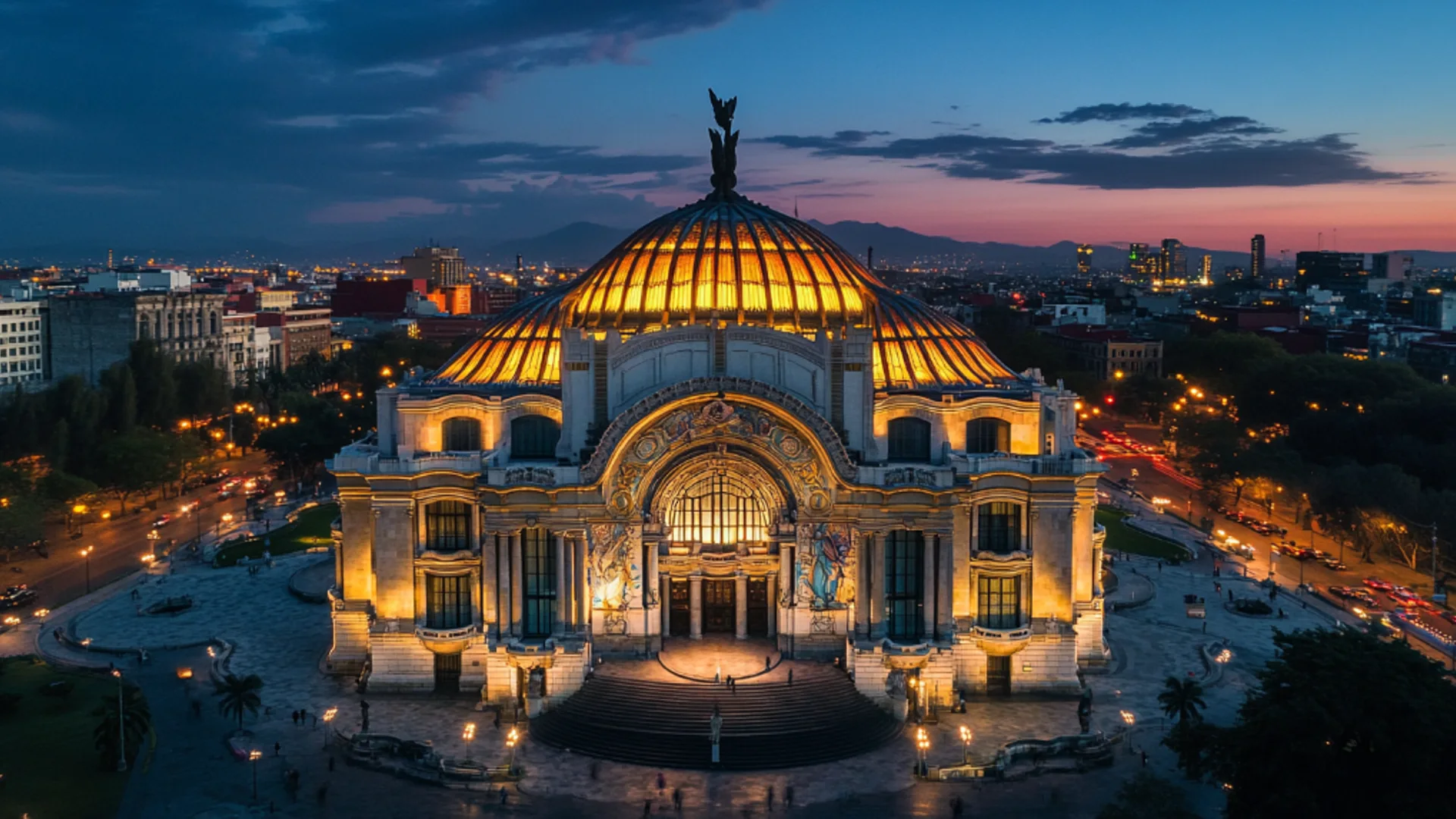
A city built on a lakebed, where the ruins of the Aztec Templo Mayor sit beside a colonial cathedral in the Zocalo. This is not a museum — the pre-Hispanic pantry is alive in every market, the cantina is a living social contract, and the traffic is a force of nature. It operates on a logic older than the Spanish conquest, with a pace dictated by the sun and the next meal.
Tacos al pastor were adapted from the Lebanese shawarma spit; it is the city's defining street food, not an ancient tradition.
The entire city is sinking, built on the soft bed of the ancient Lake Texcoco, dropping several inches a year.
Huitlacoche, the corn fungus considered a delicacy, was once classified as a disease by European colonizers who failed to understand its value.
Every pick, at a glance
Swim on the roof of a 17th-century palace, looking out over the cathedral domes of the Centro.
Centro HistoricoA 1928 Art Deco building whose triangular rooftop bar remains the social heart of the neighborhood.
CondesaLive on Polanco's luxury boulevard in a converted mansion where the spa treatments use agave and copal.
PolancoStay in a work of architectural theory, where the swimming pool is in the lobby and the facade is a screen of colored glass.
JuarezTaste time itself in the mole madre, a dark, complex circle that has been evolving for thousands of days.
PolancoThe tuna tostada is a mandatory first order, followed by the signature grilled fish, split between red adobo and green parsley.
Roma NorteTaste the origin story of tacos al pastor, sliced directly from the vertical spit at the institution that helped invent them in 1959.
Centro HistoricoFor less than a dollar, drink a traditional cafe de olla at the Coyoacan corner stand that has caffeinated the neighborhood since 1953.
CoyoacanDine on edible weeds and insects elevated to fine art, in a restaurant where the menu is dictated by the morning's market run.
PolancoThe bar that taught CDMX to take cocktails seriously, using ingredients like Oaxacan pasilla chiles to redefine the Negroni.
Roma NorteSip your way through mezcal's terroir, from a common espadin to a wild madrecuishe that took 15 years to mature.
CondesaOrder a round of beers and the kitchen feeds you for free—the botanas tradition, alive and well in a cantina that's operated since 1932.
Centro HistoricoNorth America's best bar is hidden in Juarez; find the concealed entrance and submit to an evening of pure cocktail theatre.
JuarezStep inside Frida Kahlo's cobalt-blue world, a house preserved exactly as she left it, from her studio paints to her hand-painted corsets.
CoyoacanInside a sinking Art Nouveau palace, stand before Diego Rivera's resurrected Rockefeller mural, 'Man at the Crossroads'.
Centro HistoricoHoused in a masterpiece of Mexican modernism, this is home to the actual Aztec Sun Stone and the feathered serpent of Teotihuacan.
ChapultepecWitness the city's foundational violence, where the Aztec ceremonial pyramid emerges from beneath the colonial streets built to erase it.
Centro HistoricoMexico's national film centre — ten screens in a modernist campus where the outdoor corridors between screenings feel like part of the programme.
CoyoacánDrink tequila with sangrita at the 1925 cantina that formalized mariachi, where bands from the plaza come to play for real.
Centro HistoricoA Centro punk dive where the mezcal is cheap, the music is loud, and the crowd is the CDMX you won't find in a boutique hotel.
Centro Historico- Use Uber or Didi. They are safer and more reliable than hailing street taxis, especially at night.
- Lunch is the main meal of the day, happening between 2 PM and 4 PM. This is the best time to experience the city's top restaurants.
- The altitude is over 7,000 feet. Take it easy on your first day and stay hydrated to avoid altitude sickness.
- Book tickets online for Museo Frida Kahlo (Casa Azul) and Palacio de Bellas Artes weeks in advance to avoid punishing queues.
- Always carry cash (Mexican Pesos) for street food, market shopping, and tipping. Many smaller establishments do not accept cards.
- The Metro is incredibly efficient for covering long distances, but avoid it during peak rush hours (7-9 AM, 6-8 PM) unless you enjoy crowds.
Where Things Are
Four neighborhoods to orient your first visit
Centro Historico
The Zocalo, Templo Mayor, Palacio de Bellas Artes, cantinas that have poured since the Revolution, colonial grandeur built directly on top of Aztec foundations. The city's oldest layer, still its most intense.
Roma Norte
Tree-lined streets beneath art deco mansions, the creative class drinking mezcal on sidewalk terraces, restaurants that draw from every corner of Mexico and beyond. Roma Norte is where CDMX's contemporary identity crystallizes.
Condesa
Parque Mexico and Parque Espana anchor a neighborhood of art nouveau curves, sidewalk cafes, and a brunch culture that runs from Thursday through Sunday. Condesa is Roma's gentler, greener sibling.
Coyoacan
Frida Kahlo's blue house, cobblestone streets, the weekend market around the plaza, bohemian village energy inside a megalopolis of twenty-two million. Coyoacan feels like a town that the city swallowed but could not digest.