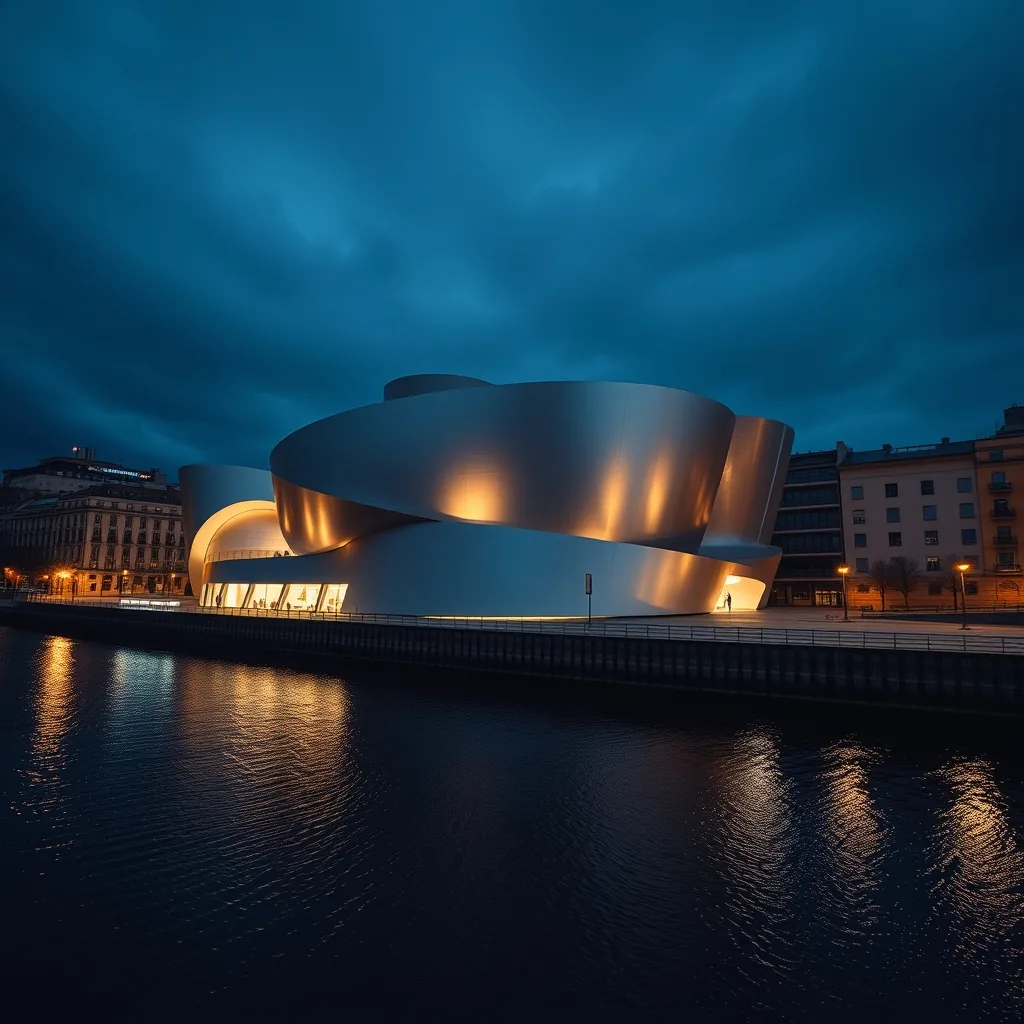
This is a city reborn. The Guggenheim didn't just land here; it re-oriented gravity toward the Nervión river. But the real Bilbao lives in the contrast: the grand 19th-century boulevards of the Ensanche versus the medieval labyrinth of the Casco Viejo, where the city's heart still beats in its original seven streets.
The 'Bilbao effect' is real, but the city's wealth was first built on iron ore and shipbuilding, not art.
The local white wine, Txakoli (chah-ko-lee), is poured from a great height to give it a slight, natural effervescence.
The city's metro stations, designed by Norman Foster, are known as 'Fosteritos' and are architectural marvels in their own right.
Every pick, at a glance
Sleep opposite a masterpiece. The former Gran Hotel Domine frames Gehry's Guggenheim from its windows and rooftop, the city's modern icon reflecting the sky back at you.
AbandoibarraThe grande dame where Hemingway slept and the Basque government once convened, all under a vast, elegant stained-glass dome.
Abando / EnsancheDiscreet design by fashion designer Antonio Miró; a quiet, minimalist statement between two world-class museums.
AbandoibarraInside the Guggenheim, a stark white canvas for Josean Alija's vegetable-forward, Michelin-starred modern Basque cuisine.
AbandoibarraBasque soul food, ladled from steaming earthenware pots. You don't order from a menu, you point at the bubbling cazuelas of tripe and squid.
Casco ViejoCome for the grand Moorish tilework, stay for the pintxo moruno—spiced lamb skewers grilled over coals at their own dedicated bar.
Abando / EnsancheSit at the counter overlooking the kitchen and the river for a Michelin-starred conversation with the market's catch of the day.
Casco ViejoA pastry house since 1852 and home of the Carolina — puff pastry crowned with meringue, egg-yolk glaze, and dark chocolate. The definitive Bilbao sweet.
Abando / EnsancheA masterclass in the competition-winning pintxo. Find their latest creation, often involving a slow-cooked egg, at the end of the bar.
Casco ViejoA temple to the pig. Order a plate of the Jamón Ibérico de Bellota, carved to order, and understand the religion of Spanish ham.
Abando / EnsancheMarble counters, bottles to the ceiling, and perfectly cut ham. A Plaza Nueva classic where you drink Rioja and feel the city's history.
Casco ViejoThe unpretentious anchor of Plaza Nueva, lined with historic tiles. Order the classic 'Gilda'—an anchovy, olive, and pepper skewer—and a glass of crisp txakoli.
Casco ViejoThe building that changed everything. Walk Richard Serra's 'The Matter of Time' inside, then watch the sun set on Gehry's titanium skin outside.
AbandoibarraOne of Europe's largest covered markets, an Art Deco beauty. Browse the fish stalls below, then eat pintxos on the gastronomic floor above.
Casco ViejoSince 1915, this little red train has climbed the hill to reveal the city's best panorama. The whole of Bilbao, cupped in its green hills.
Abandoibarra- A 'txikiteo' is a pintxo bar crawl. Go from bar to bar, having one small drink (a 'txikito') and one pintxo at each. Don't settle in.
- The Guggenheim is closed on Mondays, with rare exceptions. Always check the official calendar before you plan your visit.
- Pay at the end. Keep track of what you've had, and tell the bartender when you're ready to leave. The system runs on honor.
- Use the metro. Designed by Norman Foster, its sleek entrances—called 'Fosteritos'—are worth seeing on their own.
- Look for the 'Gilda,' the original pintxo named for Rita Hayworth: a spicy, salty bite of anchovy, olive, and guindilla pepper on a stick.
Where Things Are
Four neighborhoods to orient your first visit
Casco Viejo
The medieval old town on the east bank of the Nervión, built around the Siete Calles — the original Seven Streets the whole city grew out of. Stone underfoot, balconies overhead, and the smell of txakoli and grilled bread leaking out of every doorway. This is where Bilbao keeps its appetite.
Abando / Ensanche
The 19th-century expansion across the river on the west bank, laid out in confident straight lines when industrial money was pouring in. Gran Vía runs through it like a spine, banks and department stores shoulder to shoulder, and the grand cafes still serve coffee the slow way. This is Bilbao's civic, well-dressed face.
Abandoibarra
The regenerated riverfront where Bilbao buried its industrial past under titanium. Gehry's Guggenheim curls along the Nervión like something washed up from the sea, the promenade runs unbroken past the Palacio Euskalduna, and the University of Deusto watches from the far bank. This stretch is the whole story of the city's reinvention, told in one walk.
Indautxu
The residential district just south of Abando, built around the broad Plaza Indautxu, where bilbaínos actually live and eat. No museum queues, no postcards — just dense apartment blocks, neighborhood bars, and the kind of pintxos street locals defend with real conviction. This is the city off-duty.