Valencia diverted its river and built a garden. Now, a nine-kilometer green ribbon connects the city, from the baroque spires of El Carme to the bone-white skeleton of Calatrava’s future. It’s a city that runs on sunlit routines, where paella is a schedule, not a souvenir.
After a 1957 flood, the city diverted its river, leaving a dry bed that citizens demanded become a park, not a highway.
True Paella Valenciana has rabbit and chicken. If you see seafood, it’s a dish for visitors, not locals.
Agua de Valencia, the city's signature cocktail, was invented in 1959 at Cervecería Madrid, not some ancient bar.
Stay inside a 19th-century palace where your room might feature original Gothic arches or a slice of the old Roman wall.
Ciutat VellaEmbrace Ruzafa's bohemian energy in an eclectic-maximalist hotel where every room is a different kind of theatre.
RuzafaSleep where a palace and convent connect, balancing minimalist design against 19th-century frescoes and moldings.
Ciutat VellaWake up to Mediterranean views from a balcony and walk directly onto the sand. A functional, modern perch on the city's edge.
Cabanyal / MarinaServing sailors since 1836. Point at the barrels, order anchovies and salt cod with peppers, and trust the history.
Cabanyal / MarinaTwo Michelin stars earned by rebuilding Valencian ingredients with obsessive precision. A tasting menu that is a statement.
BenicalapThe city's oldest horchatería. Pair the icy, earthy tigernut milk with a farton for dipping. It's the whole point.
Ciutat VellaRicard Camarena's casual side. Get the famous pastrami-filled bao buns and the tuna tataki; it’s Michelin-adjacent cooking for mortals.
RuzafaHemingway ate paella here. Order the traditional Valenciana and listen to the waves from the grand, old-fashioned dining room.
Cabanyal / MarinaA baroque fever dream behind a massive brass-studded portal. The mandatory order is the house Agua de Valencia, served in a silver goblet.
Ciutat VellaVermut de grifo, poured directly from a wooden barrel into a small glass since 1836. That’s the menu.
El CarmeThe beach chiringuito, reimagined with natural wine and actual design sense. Claim a table in the sand at golden hour.
PataconaA bookstore by day, a speakeasy by night. Ask for their seasonal Martinez made with Spanish vermouth.
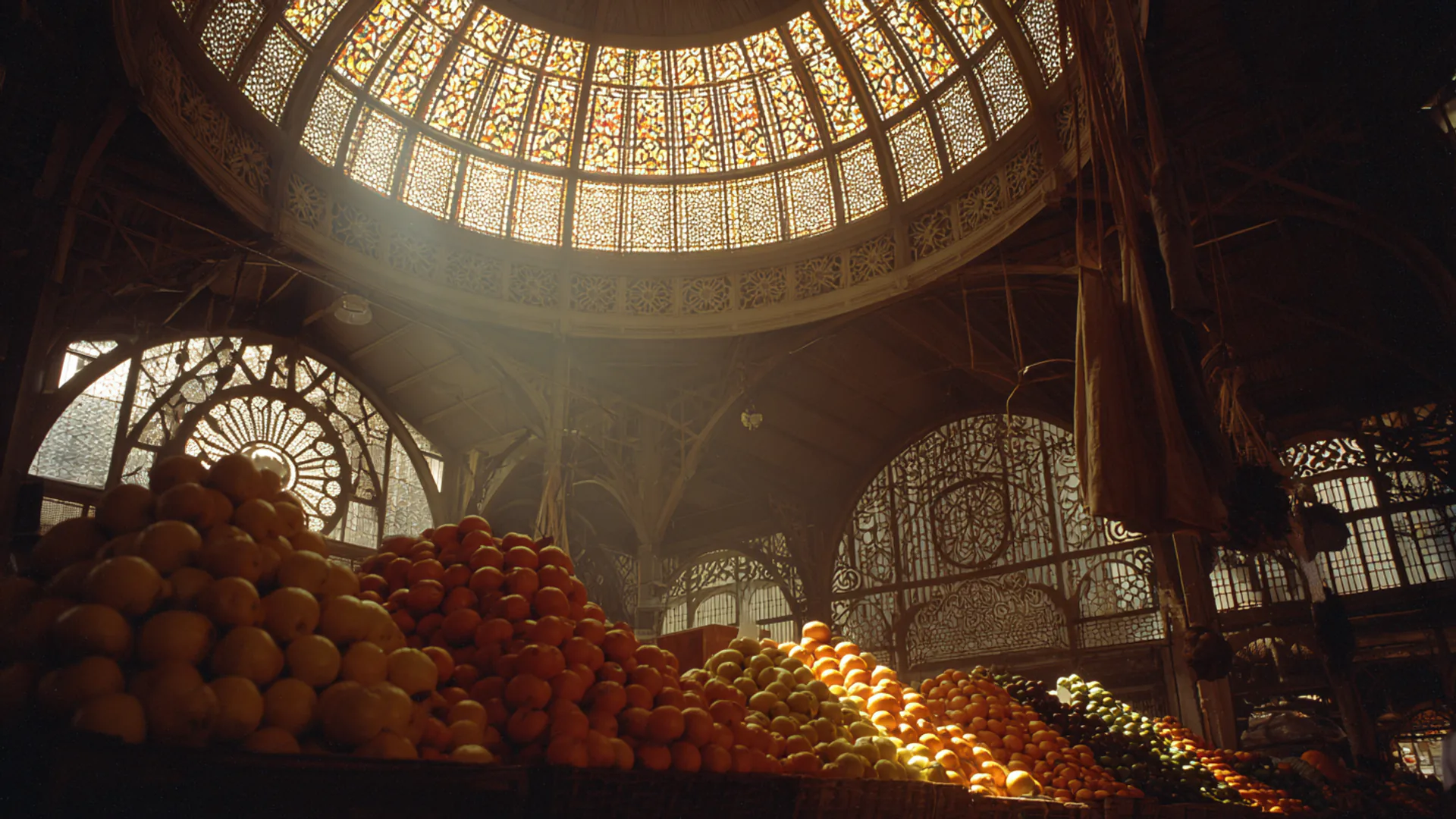
RuzafaGo for the soaring 1928 ironwork and tile dome; stay for the red prawns and barrels of olives.
Ciutat VellaEnter the Felix Candela-designed lily pads to find the underwater tunnel; it's a structural marvel that happens to house sharks.
Quatre CarreresValencia's best modern art. See the iron sculptures of Julio González, a pioneer who worked with Picasso.
El CarmeRent a bike and ride the nine-kilometer green ribbon where a river used to be. It's the city's collective living room.
Ciutat VellaA small, quiet room where jazz plays at conversational volume and the bartenders mix a refined, spirit-forward Old Fashioned.
Ciutat VellaA tiny basement club for actual listening. The drinks are simple because you’re here for the music, not the mixology.
Ciutat VellaThe birthplace of Agua de Valencia pours its original recipe in an Art Nouveau salon where the quiet clink of crystal sets the tempo.
Ciutat Vella- Lunch is the main meal, from 2-4 PM. Many shops close; plan your afternoon around it.
- Paella is a lunch dish, never dinner. Ordering it at night is the surest sign you're a tourist.
- Buy a SUMA 10 card at a metro station for 10 journeys on bus, metro, and tram. It’s cheaper than single tickets.
- Rent a Valenbisi bike for the Turia gardens, but use your feet in the winding streets of El Carme.
- Book dinner reservations, especially in Ruzafa. A 9 PM seating is considered early.
Where Things Are
Four neighborhoods to orient your first visit
Ciutat Vella
Historic center—classic cafés, Agua de Valencia originals, baroque interiors.
Ruzafa
Design-forward district with speakeasies and underground clubs.
Cabanyal / Marina
Beachfront industrial conversions, airy terraces, and sunset bars.
El Carme
Medieval lanes with ornate cafés and creative bars.