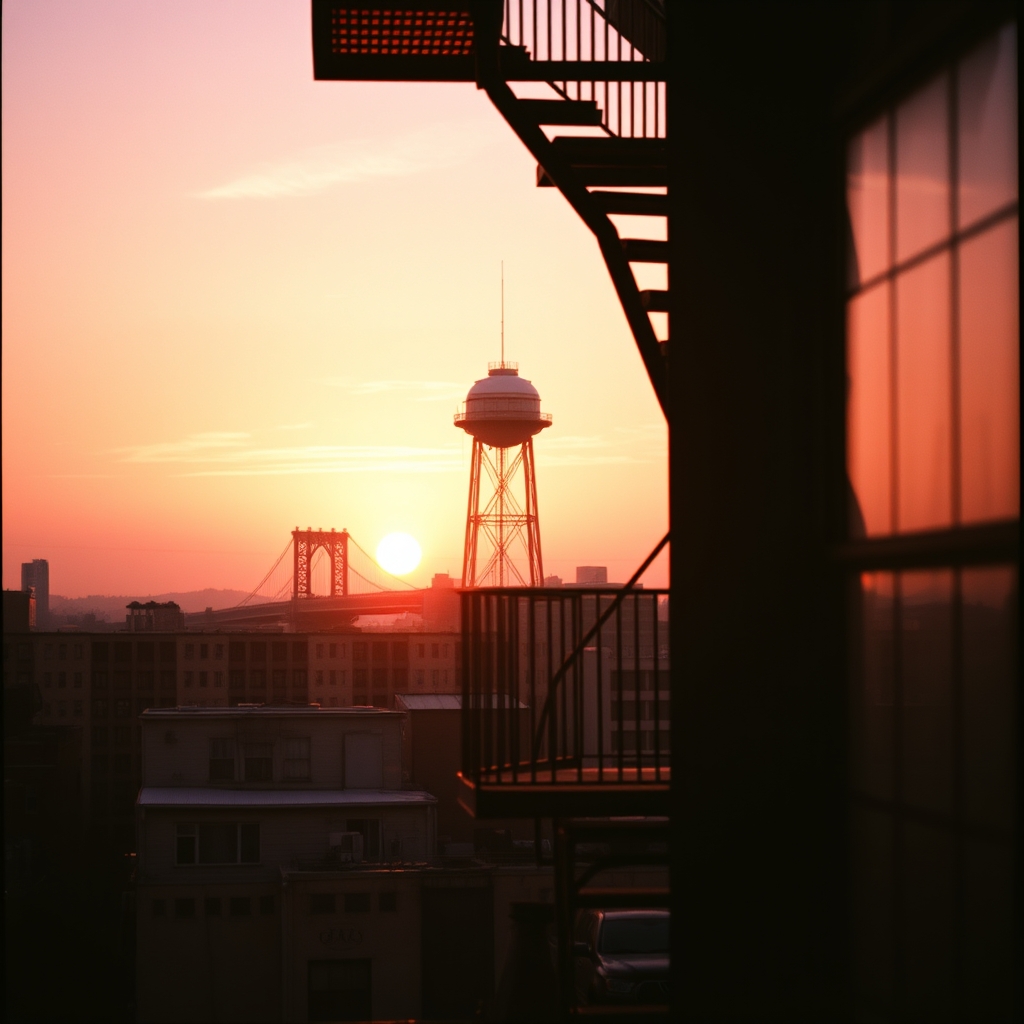
There is a moment each evening when the setting sun catches the Chrysler Building's steel crown and the entire spire ignites—a seven-tiered torch of silver and amber floating above Midtown. For ninety-five years, New Yorkers have paused on Lexington Avenue to witness this daily miracle, their necks craned toward what many consider the most beautiful skyscraper ever built. The building is not the tallest, nor was it ever the most practical, but it remains the most beloved: a monument to the audacious belief that a commercial tower could also be a work of art.
Walter Chrysler, the Wisconsin farm boy who rose to lead one of America's great automobile empires, wanted a headquarters that would announce his company's arrival among the industrial giants. He hired William Van Alen, a flamboyant architect known for wearing capes and butterfly bow ties, and gave him a single directive: build something unprecedented. The result was a building that borrowed from no existing style but instead invented its own vocabulary—one drawn from the machine age itself. The corner eagles at the 61st floor are modeled on Chrysler hood ornaments. The building's distinctive triangular windows recall the radiator grilles of 1929 automobiles. Even the lobby's elevator doors, inlaid with exotic woods depicting lotus flowers and papyrus, suggest the pistons and gears of an engine rendered in Art Deco splendor.
The story of the spire is pure New York theater. Van Alen's rival, H. Craig Severance, was simultaneously racing to complete 40 Wall Street, and the two architects engaged in a public battle for the title of world's tallest building. Severance added a lantern to his tower, believing he had won. But Van Alen had secretly assembled a 185-foot stainless steel spire inside the Chrysler's fire shaft. On October 23, 1929, workers hoisted it through the roof in just ninety minutes, and the Chrysler Building claimed the crown. The victory was brief—the Empire State Building would surpass it eleven months later—but the legend was permanent.
The lobby rewards close attention. Edward Trumbull's ceiling mural, spanning 97 by 110 feet, celebrates transportation and human industry in the amber and sienna tones of a Renaissance fresco. The red Moroccan marble walls are streaked with white veins that catch the light from the original bronze torchières. This is a space designed for arrival, for the theatrical moment of entering a building that believes commerce and beauty are not opposites.
"The Chrysler Building is the greatest work of Art Deco architecture in the world. It is the one skyscraper that architects, critics, and the public all agree to love."
— Paul Goldberger, architecture critic
Today the Chrysler Building operates as a premium office address, its observation deck long closed to casual visitors. But the lobby remains open, and the building's exterior is always on view—a reminder that the best architecture doesn't just occupy space but transforms it. Stand at the corner of 42nd and Lexington at sunset. Watch the crown catch fire. Understand why this building, conceived in the final months before the Great Depression, still represents New York's highest aspirations: the belief that a city can build not just upward, but toward something luminous.