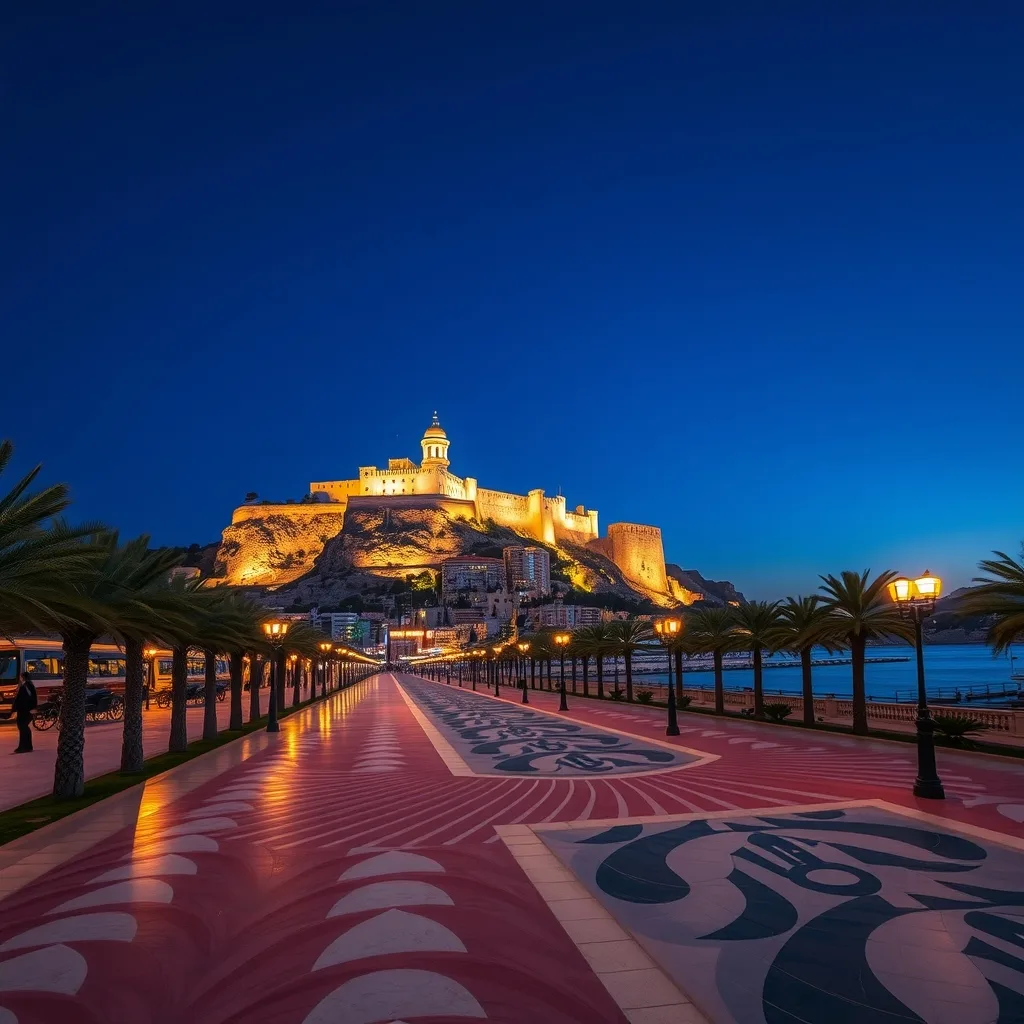
Alicante is easy to underestimate from the airport road. The city itself is small, flat where it matters and steep where it counts: a nineteenth-century grid of barras and tabernas around Calle Castaños and the Mercado Central, an old town climbing from the Concatedral up through the whitewashed lanes of Santa Cruz to the castle, and the Explanada de España along the water, where the whole city walks every evening of the year. The food is product first — salazones, gamba roja, arroz a banda, turrón and horchata — and the best of it is served at a counter you cannot book. Come for the barras and the paseo; stay for the rice.
Salazones are the local cured fish — mojama (tuna loin), hueva (roe) — eaten in thin slices with almonds and tomato. The Mercado Central stalls sell them by weight.
The barras of Nou Manolín and Piripi cannot be reserved; only the upstairs dining rooms can. Arrive at one o'clock sharp and stand.
The Explanada's wave-pattern marble runs from the Puerta del Mar to the Canalejas park. The paseo, between the lights after sunset, is the city's daily ritual.
Every pick, at a glance
Eat
3 picksBarras, salazones and rice
The counter the city is measured against, since 1971 — named the best bar counter in the world in 2025, with a maître who took the national prize in 2026. Gambas rojas, salazones, no reservations.
CentroShow 2 moreShow fewer
Sixty-five years of rice on the marina, from a family that runs its own rice school. Arroz a banda is the dish the rest of the city is judged by.
Explanada y PuertoTwo friends, five services a week, one menu written that morning from the lonja. Michelin gave it a Bib Gourmand; the room still belongs to the barrio.
BenalúaDrink
3 picksVermut, the Bailén axis and the rooftops
An ultramarinos-styled barra with a Repsol Solete, open from the vermut hour to two in the morning. The canelón de la madre de Carlos is the order; the room is the reason.
CentroShow 2 moreShow fewer
Twenty-four years on Castaños and a national cocktail prize: the reference bar, with a terrace in the middle of the tardeo and craft behind the door.
CentroA rooftop under the castle that puts Alicante in the glass — Fondillón in one cocktail, Jijona turrón in another — and runs sunset tastings of small local bodegas.
Casco AntiguoSee
3 picksThe castle, the lanes, the market
Free, open until eleven in summer, and the whole bay from the ramparts at dusk. Take the lift up from the beach and walk down through the old town.
Casco AntiguoShow 2 moreShow fewer
Whitewashed stairs and flower pots on the castle slope, a thirteenth-century ermita at the top, and the bars of El Barrio waiting at the bottom.
Casco AntiguoA 1921 modernista market where the city's food identity sits on the counter: mojama, hueva, gamba roja, and a vermut bar on stall 127. Mornings only.
CentroHorchata, Turrón & Coffee
3 picksThe Explanada kiosk and the roasters
A blue-tiled shopfront by the market, third generation since 1930, open May to September only. The queue on the first of May is how the summer starts.
CentroShow 2 moreShow fewer
The 1916 kiosk on the Explanada mosaic, reopened in June 2026 as an artisan heladería. A horchata here at dusk, facing Casa Carbonell, is the most Alicante hour there is.
Explanada y PuertoThe one serious roaster room inside the old town, in a tall house that still looks like a house, two minutes from the Concatedral. Open seven days.
Casco AntiguoSleep
2 picksA convent, an 1894 house, a palacete
Where Things Are
Four neighborhoods to orient your first visit
Centro
The nineteenth-century grid west of the Rambla — Calle Castaños and its cross-streets, the Teatro Principal, the modernista Mercado Central at the top — where the city's classic barras and tabernas are shoulder to shoulder. This is where Alicante eats standing up: salazones and gambas rojas on a marble counter, a caña, and a walk to the next one.
Casco Antiguo
The old town climbing from the Concatedral de San Nicolás and the Ayuntamiento up the flank of Benacantil toward the castle — the whitewashed, flower-potted lanes of the Barrio de Santa Cruz above, and El Barrio's dense grid of bars below. Alicante's oldest streets and its late-night quarter are the same few blocks, which tells you most of what you need to know about the city.
Explanada y Puerto
The waterfront: the Explanada de España's millions of marble tesserae rippling under four rows of palms, the marina and its terraces beyond, and Postiguet beach curling under the castle rock to the east. Alicante's public living room, where the paseo happens every evening of the year.